
At midday in July, the sand of the dunes can exceed 70°C.
In January, the same dune cools at night to near zero.
Between these two extremes lie eleven months of desert climate that are best understood before choosing your dates.
What is the hottest month in Merzouga?
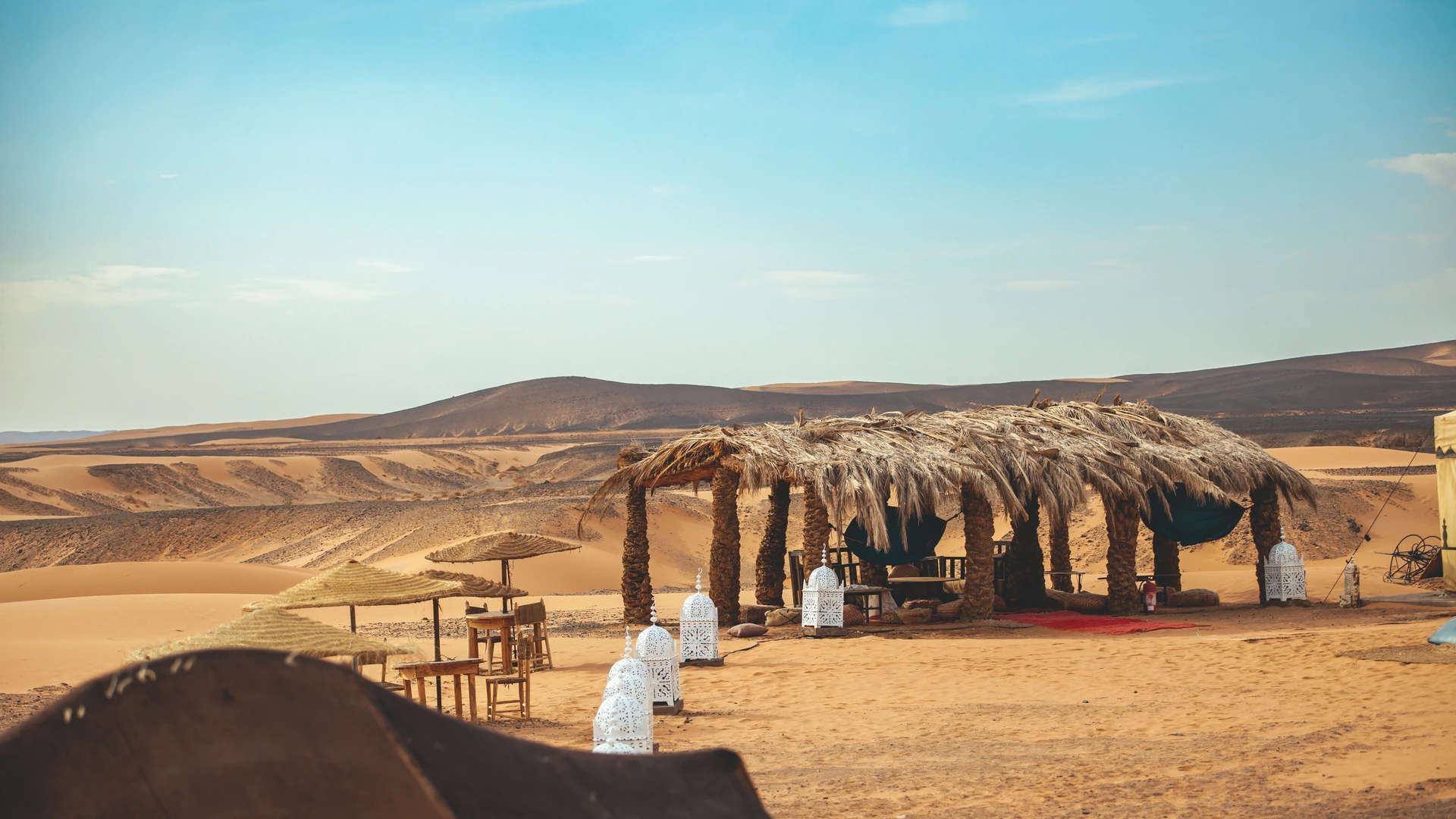
From June to September, afternoons regularly climb to between 42 and 47°C in the shade.
On the dunes, there is no shade.
Camel rides are then timed to the edges of the day, early morning or just before sunset, never between midday and 4pm.
A traveller who has never experienced this kind of heat often underestimates how much it changes the rhythm of an entire day: you walk less, you drink more, you seek the shade of a tent rather than a tree, since there are none.
Does it get cold at night in the Merzouga desert?
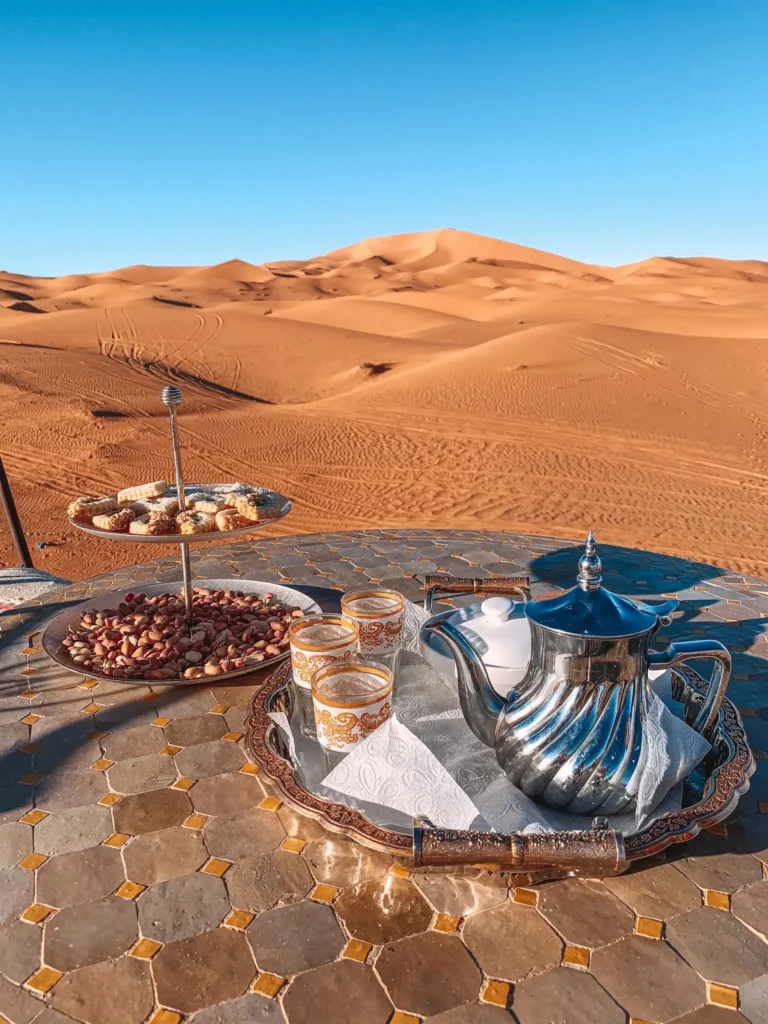
From December to February, the day remains surprisingly mild, often 18 to 20°C in the sun.
Then the sun goes down behind the dunes.
And everything changes.
The desert camp loses five, ten, sometimes fifteen degrees in an hour, down to near zero on the clearest nights.
It is this contrast that surprises most: you go from light afternoon clothing to a thick fleece at dinner, under a sky that has never been so clear.
Does it rain often in Merzouga, and when is the best time to visit?
If your schedule allows, these two shoulder seasons offer the best compromise: days between 25 and 32°C, nights between 12 and 15°C, with no heavy gear needed.
Rainfall remains rare all year, less than 50 mm accumulated, but when a storm breaks in spring or autumn, it can cause sudden flash floods in the dried-up riverbeds.
It is not common.
It is not insignificant either, and a good local guide will adjust the route if the sky darkens.
Should you worry about sand wind in Merzouga?
The chergui, a hot wind from the Sahara, blows in episodes, especially in late spring and summer.
It reduces visibility and seeps into everything that is not sealed.
The cotton cheche, already useful against the sun, becomes the only effective protection for your face.
To check conditions before you go, the ten-day Meteoblue forecast for Merzouga remains a reliable reference, more accurate than generic apps for this desert area.
How do you choose a desert camp based on the season?
In summer, a camp with an air-conditioned tent genuinely transforms the night.
In winter, it is the duvets and extra blankets that matter, not the air conditioning.
Our options range from 80 € per adult on a shared group to 180 € on the luxury version, or on request for a private vehicle.
To compare with another desert destination in southern Morocco, our article Merzouga vs Zagora details the climate differences between the two ergs.
And to pin down exactly where these dunes are that we have been talking about, the Erg Chebbi guide is a useful companion read.
Practical tip
A warm layer remains useful even in the height of summer: the night in a desert camp always drops lower than you expect.
A cap, sun cream and a reusable water bottle complete the basic gear, whatever season you choose.
Book Your Merzouga Tour on WhatsApp
Instant confirmation with no deposit required in advance.
Pick-up from your hotel.
Book Your Stay