
Merzouga is more than just a passing point on the way to the surrounding desert dunes.
It is a base from which a whole series of activities are organised, from the sand to the village, easily filling two or three days without ever feeling repetitive.
Here is what is genuinely worth your time, and what remains secondary depending on the actual length of your stay.
What activities can you do in the dunes?
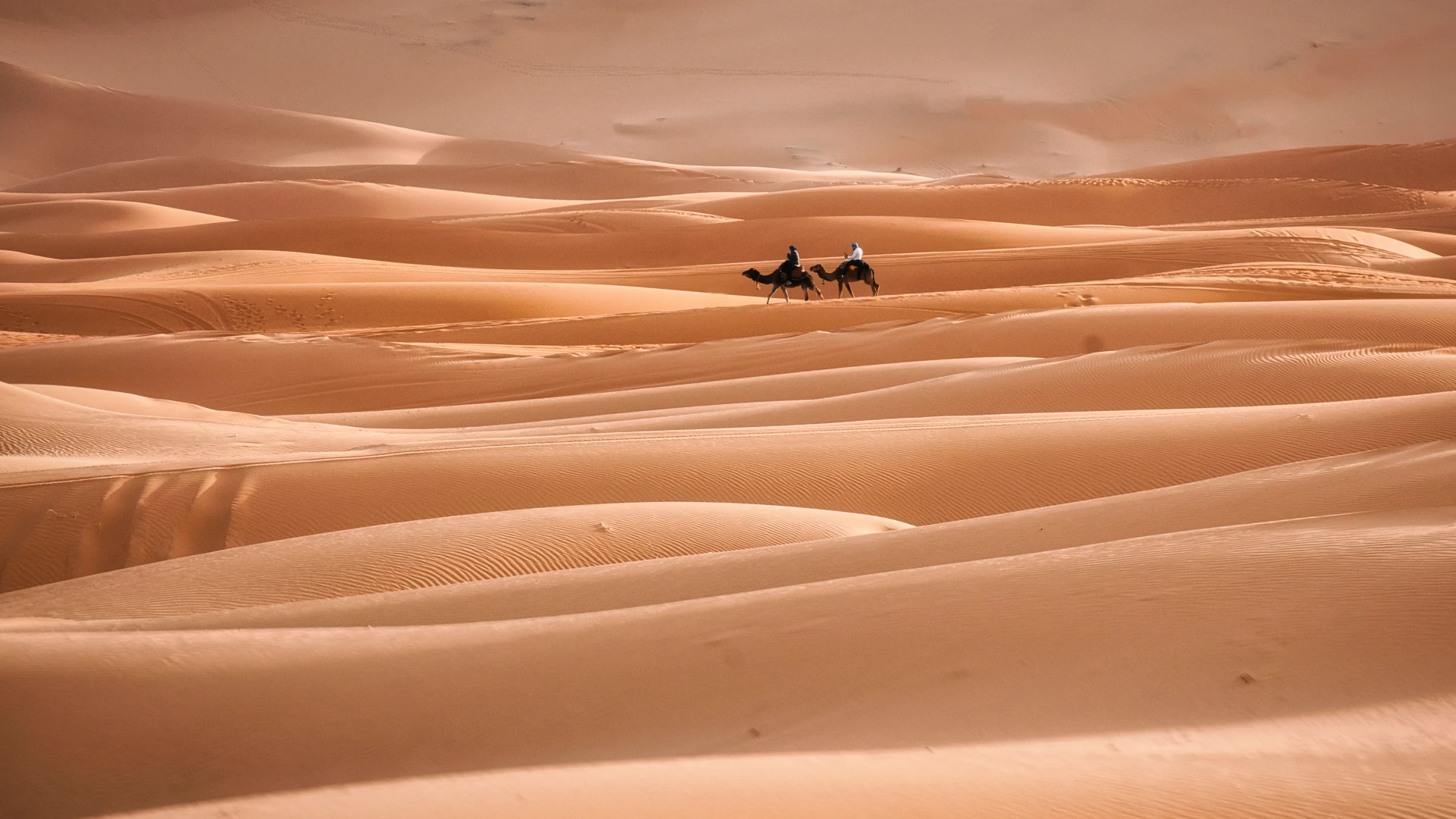
The camel ride remains the most popular experience, almost always combined with a night in a desert camp in the dunes.
Departure at sunset, Berber dinner, music around the campfire, return at dawn — this is the itinerary that most tours include as standard.
For more mechanical thrills, quad biking and buggy rides let you cover more ground in less time, generally in the late afternoon to make the most of the low-angle light.
Sandboarding, less well known, involves sliding down the sand slopes on a board — accessible without any particular physical effort, and often offered as an add-on to another activity rather than a standalone outing.
Finally, stargazing from the desert camp requires no special equipment — the sky over Erg Chebbi, far from any light pollution, is enough on its own.
Most of these activities combine naturally on the same day: quad biking or a buggy ride in the late afternoon, then the camel ride and desert camp follow directly at sunset, without having to return to the village in between.
What is there to see outside the dunes?
The village of Khamlia, about ten kilometres from Merzouga, is home to a community known for its gnawa music — percussion and singing sessions often put on in the evening for passing travellers.
It is a short activity, an hour or two, but one that offers a distinct change of pace from the desert.
The Rissani market, the largest traditional souk in the area, is held on specific days of the week and is worth visiting for the atmosphere as much as for the shopping itself.
The seasonal lake of Dayet Srij, when it holds water after the rains, attracts flamingos — an unexpected contrast with the surrounding desert landscape, but entirely dependent on that year's weather.
These activities away from the desert make the most sense on a stay of two nights or more: they provide a breather between two intense moments in the dunes, and let you leave with an image of Merzouga that goes beyond the postcard scenery.
How long do you need to do it all?
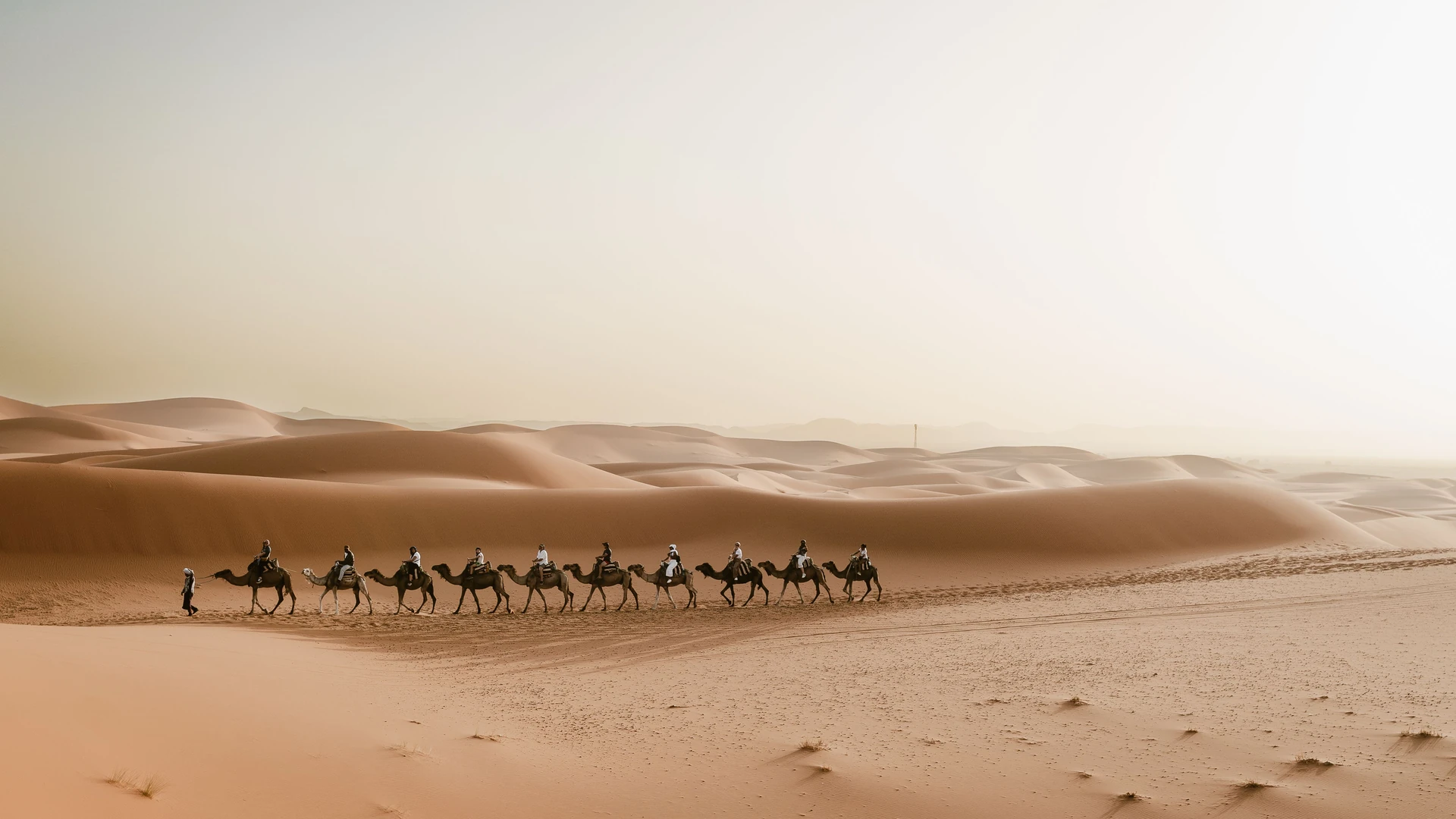
With a single night on site, it is better to focus on the desert experience itself — camel ride and desert camp — rather than trying to fit everything into one day.
Logistical stress often spoils the experience more than the number of activities missed.
With two nights, it becomes possible to add a mechanical activity (quad or buggy) and an outing to Khamlia or Rissani without rushing.
According to tourist visitor data from the Moroccan National Tourist Office, the average length of stay in the south-eastern Moroccan desert region is around two to three nights — a pace that leaves time to vary without rushing.
What is not actually essential, contrary to popular belief?
Some activities promoted in tourist brochures are in fact secondary.
4x4 excursions to distant viewpoints, for example, mostly add extra driving time for a visual gain that is often limited compared to what you can already see from the desert camp.
Similarly, piling up mechanical activities (quad, buggy, sandboarding) on the same day often ends up feeling repetitive after the first hour — better to pick one, do it at a good time of day, rather than ticking off the whole list on principle.
This urge to do everything, very human before a trip, often gives way to a more selective approach once you are there — the fatigue built up over a few desert days quickly reminds you that less, but better chosen, is almost always the best strategy.
How do you plan your day around the heat?
The heat largely dictates the programme, especially between April and September.
Physical activities — camel rides, quad biking, walking in the dunes — naturally fit early morning or late afternoon, never between midday and 4pm when the sun is at its highest.
This constraint is not just about comfort: it literally shapes the rhythm of all organised excursions in Merzouga, which explains why most tours follow very similar schedules from one operator to another, regardless of differences in price or standard.
How do you choose based on the type of traveller?
For photographers, sunrise and sunset on the dunes remain the absolute priority, even if it means sacrificing a side activity to avoid being tired at the crucial moment.
For families with young children, a short camel ride and sandboarding are better suited than more intense mechanical activities like quad biking.
For travellers who mainly seek peace and disconnection, a single night in a desert camp with no additional activity is more than enough — adding things to the schedule for the sake of it sometimes dilutes exactly what made the stay worthwhile.
There is no single programme that is universally better than another: the right choice almost always depends on what each traveller is looking for in the desert, rather than the number of activities ticked off a list drawn up in a brochure.
Practical tip
Do not combine more than two mechanical activities (quad, buggy, sandboarding) in the same day — heat and sand tire you out faster than you might think, and the best moment of the day is always reserved for sunset on the dunes.
Book Your Merzouga Tour on WhatsApp
Instant confirmation with no deposit required in advance.
Pick-up from your hotel.
Book Your Stay