
Merzouga Guide: everything you need to visit the desert and Erg Chebbi
Merzouga is more than a photo of dunes at sunset. This guide helps you choose the right season, the right length of stay, the activities that are genuinely worth the trip and the means of transport that best fits your itinerary.
Quick answer
Merzouga is a village in south-eastern Morocco on the edge of the Erg Chebbi dunes, about 560 km from Marrakech. Plan two to three nights there, ideally in spring or autumn.
- Where: Errachidia province (Drâa-Tafilalet region), about 50 km south of Erfoud, near Rissani.
- When to go: March to May and October to November, depending on the year's weather.
- How long: two nights at least, three to explore without rushing.
- What to do: camel ride, a night in a desert camp, sunrise over the dunes, sandboarding, a 4x4 trip, the village of Khamlia.
- With children: possible, with adapted schedules, sun protection and short activities.
Merzouga at a glance
| Where is Merzouga? | In the province of Errachidia, in south-eastern Morocco, near Rissani |
| Which desert do you visit? | Erg Chebbi, a stretch of sand dunes on the edge of the Sahara |
| How long should you stay? | Two nights minimum; three nights to explore at a relaxed pace |
| Best time to visit | March to May and October to November, depending on the year's weather |
| Signature activities | Camel trek, night in a desert camp, walking, sunrise, sandboarding and 4x4 tour |
| Suitable for children? | Yes, with adapted schedules, sun protection and short activities |
| Do you need a guide? | Not for the village; recommended for outings away from the busy areas |
Where exactly is Merzouga?
Merzouga lies in the Drâa-Tafilalet region, about 50 kilometres south of Erfoud and close to Rissani.
The village stretches along the western edge of Erg Chebbi.
So don't picture a town lost in the middle of an ocean of sand: the paved road reaches Merzouga, while the dunes begin almost immediately to the east of the village.
The Erg Chebbi is an erg — that is, an area made up mainly of dunes — and not the whole of the Moroccan Sahara.
This distinction matters: trips sold as stays "in the Merzouga desert" usually take you to the Erg Chebbi dunes and to the rocky landscapes, oases and villages that surround them.
Why visit Merzouga?
The first reason is obviously the landscape.
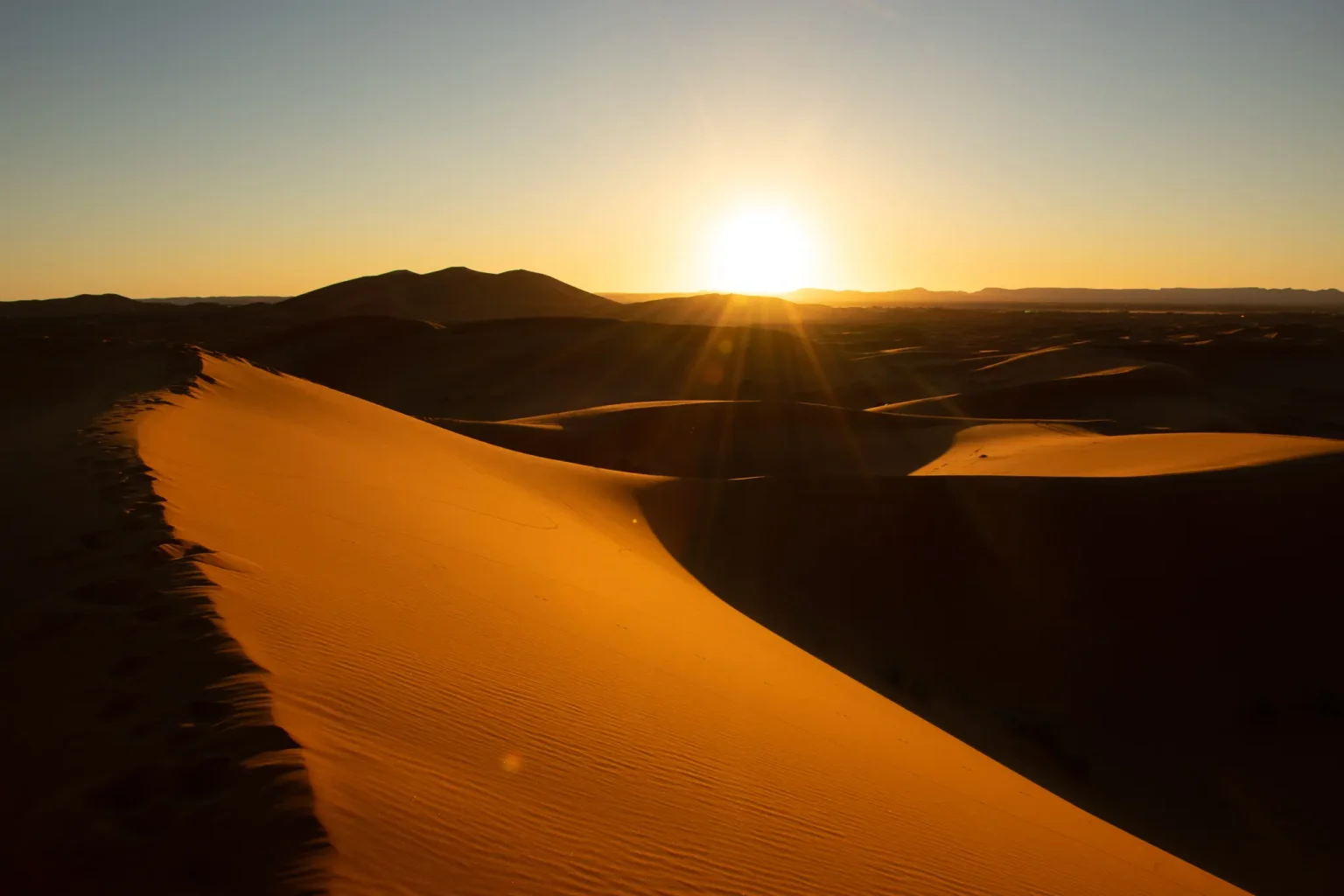
The light transforms the dunes throughout the day: pale tones in the morning, orange hues in the late afternoon, strongly contrasted relief as the sun goes down.
But Merzouga's appeal also comes from the quick transitions between settings: dunes, stony plateaux, palm groves, small farmland, villages and temporary wetlands.
Merzouga also offers a first taste of the desert that you can reach by road, without organising a multi-day expedition.
The region also has a musical, nomadic and oasis identity that you discover especially in Khamlia, Rissani and the villages near the erg.
What to do in Merzouga? The essential experiences
1. Watch the sunset over Erg Chebbi
The sunset is the simplest and often one of the most memorable experiences.
You don't need to hunt for the tallest dune: a spot slightly off to one side is enough to watch the shadows lengthen and the colours change.
Set off early enough to walk at an easy pace and avoid trampling the vegetation that holds the sand in place.
2. Go on a camel trek
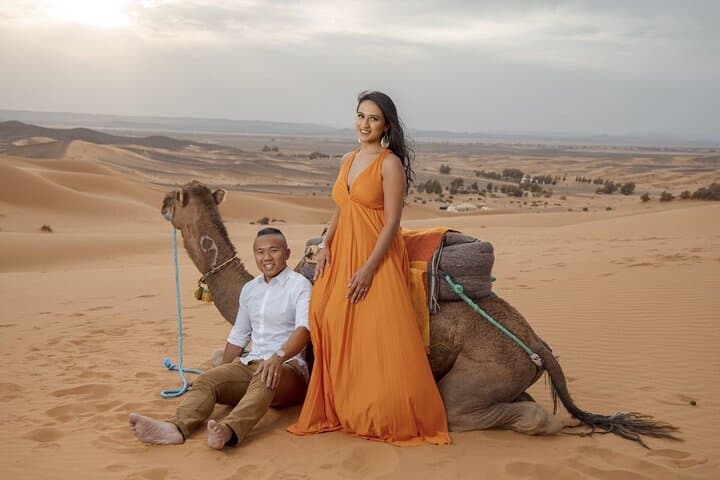
The camel trek remains Merzouga's signature activity.
Short rides usually last just long enough to reach a viewpoint or a camp.
Choose an operator that limits the load, lets the animals rest and uses properly fitted equipment.
If you have back pain, are pregnant or struggle with the straddle position, ask for a 4x4 alternative or walk to a nearby camp instead.
3. Spend a night in a desert camp
A night in a desert camp lets you experience the silence of the desert after the day visitors have left.
Camps range from a simple tent with shared toilets to a comfortable camp with full bedding and a private bathroom.
Before booking, check five things: the camp's actual location, how to get there, the toilets, which meals are included and the policy on music.
4. Watch the sunrise
The sunrise brings cooler and often calmer air than the sunset.
Ask for the exact time the day before and set off about thirty minutes early.
The light before sunrise already reveals the landscape; if you wait only for the sun itself to appear, you'll miss part of the show.
5. Try sandboarding
Sandboarding means riding a board down a dune.
The activity is open to beginners, but walking back up through the sand takes more effort than the ride down.
Choose a moderate slope, free of vegetation and away from camels or vehicles.
6. Explore the surroundings by 4x4
A 4x4 tour lets you follow the tracks around Erg Chebbi, reach rocky viewpoints and link several villages in a half-day or a full day.
How much this outing is worth depends heavily on the driver-guide: a route with context, sensible stops and considerate driving gives you far more than a quick lap around the dunes.
7. Discover Khamlia and gnawa music
Khamlia, south of Merzouga, is known for its gnawa musical traditions.
A respectful visit is not just about watching a quick performance: take the time to listen to the explanations, understand the local history and pay the artists properly when the encounter is not already included in a tour.
8. Visit Rissani and its market
Rissani is the former capital of Tafilalet and an important trading centre in the region.
Its market is especially lively on certain days, but opening hours and market days can change: confirm them locally before planning your visit.
9. Visit Dayet Srij lake when it holds water
Dayet Srij is a seasonal basin near Merzouga.
Depending on rainfall and the time of year, it may hold water or be largely dried out.
When it holds water, it attracts migratory birds and creates a striking contrast with the dunes — though their presence is never guaranteed.
10. Walk in the dunes
Walking is the most direct way to feel the landscape.
A short walk at sunrise or at the end of the day is enough for a first taste.
For a longer hike, go with a guide who knows the terrain: the landmarks all look alike, the heat builds quickly and phone coverage is no substitute for reliable navigation.
When is the best time to visit Merzouga?
The most pleasant times are generally spring, from March to May, and autumn, from October to November.
Days are often good for walking and nights are less harsh than in the depth of winter.
The weather does vary from year to year, though: check a reliable forecast shortly before you leave.
- • Winter (December to February): mild, sunny days, cold nights — sometimes very cold in the camps.
- • Spring (March to May): a good balance of temperature and daylight, with occasional windy spells.
- • Summer (June to August): extreme heat, keep activities to the early morning and the end of the day.
- • Autumn (October-November): sought-after moderate temperatures, tracks sometimes difficult after heavy rain.
How many days should you plan for Merzouga?
One night gives you a sunset, a camp stay and a morning sunrise, but leaves little margin if you arrive late.
Two nights remain the best minimum: sleep one night near the dunes and one night in a camp, or spend a day exploring the surroundings.
Three nights give you time to add Khamlia, Rissani, a hike or a 4x4 tour — the most balanced option for travellers coming by road from Marrakech or Fès.
How to get to Merzouga?
A rental car gives you the most freedom to stop along the way.
A private driver suits families and small groups who want a tailored itinerary.
An organised tour simplifies the logistics — compare the time actually spent in Merzouga, the group size, the hotels and the number of hours on the road per day.
Coach services and, on some routes, Errachidia airport round out the options, with a final road transfer.
Full details of the routes and prices are on our How to get to Merzouga page.
Where to stay in Merzouga?
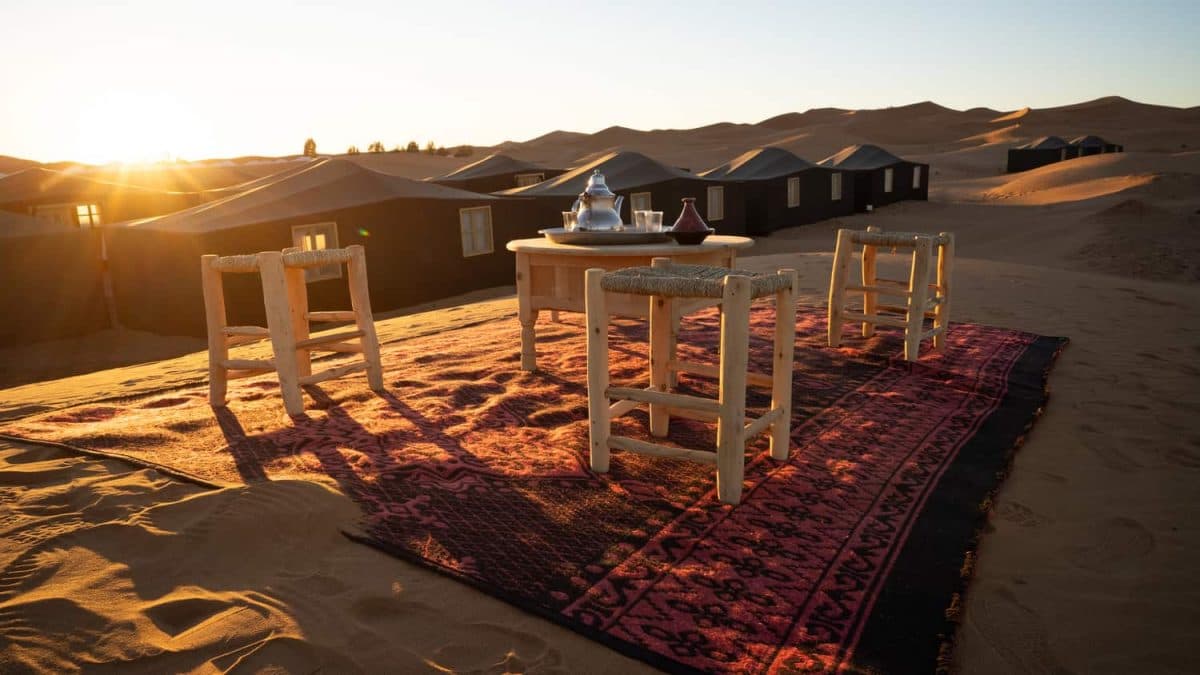
A hotel or inn on the edge of the dunes offers solid rooms and more stable temperatures — recommended for the first or last night and for families with young children.
A riad or guest house in the village makes it easier to meet the locals.
A desert camp puts atmosphere first, with very different comfort levels: since the word "luxury" is not an official standard, base your choice on specific amenities rather than the label.
You'll find our full selection on the Hotels & Riads in Merzouga page.
What budget should you plan for?
Your budget depends more on your accommodation and transport than on access to the dunes, which does not require a general ticket.
Always ask for a detailed, dated price with a clear list of inclusions and exclusions rather than a "final" rate with no update date.
The full price breakdown by package is on our budget for a trip to Merzouga page.
Desert safety tips
The desert is not a backdrop without its constraints.
Don't set off alone on a long hike, even if the dunes look close to the village.
Check the weather, tell someone your route and give up if there is strong wind, excessive heat or a risk of storms.
Drink regularly before you feel thirsty and cover your skin rather than relying on sunscreen alone.
Should you choose Merzouga or Zagora?
Merzouga is generally chosen for the great dunes of Erg Chebbi and a more spectacular sand experience.
Zagora is closer to Marrakech, but its immediate landscapes are more pre-Saharan and rocky.
The right choice depends on the time you have — if the dunes are a priority and you have at least three or four days, Merzouga often makes more sense.
Our detailed comparison: Merzouga vs Zagora.
Mistakes to avoid
- • Doing a return trip from Marrakech in two days and underestimating the time on the road.
- • Choosing on price alone without checking the camp, meals and extras.
- • Coming in summer to hike during the day without gauging the intensity of the heat.
- • Assuming Dayet Srij always holds water or that the birds are guaranteed.
- • Heading off alone deep into the dunes because the village is still visible from the start.
- • Packing only summer clothes and discovering the night-time cold too late.
Frequently Asked Questions About Merzouga
Is Merzouga in the Sahara?
Merzouga lies at the gates of the Sahara, on the edge of Erg Chebbi. Travellers come for vast Saharan dunes, surrounded by plateaux, oases and pre-Saharan villages.
Can you visit Merzouga without an organised tour?
Yes. You can reach Merzouga by car or public transport, book accommodation separately and arrange activities on site. A tour is still convenient for combining transport, stops and a desert camp.
Are two days enough to visit Merzouga?
Two days on site give you a first taste. However, a two-day return trip from Marrakech is very rushed. Ideally plan three to four days from Marrakech, including at least two nights in the area.
When is the best time to visit Merzouga?
Spring, from March to May, and autumn, from October to November, generally offer the most pleasant conditions. Still, check the weather before you leave.
Are there dunes you can reach without a camel?
Yes. The dunes border several parts of Merzouga and can be reached on foot from many places to stay. The camel ride is optional, not a requirement for experiencing Erg Chebbi.
What's the difference between a standard camp and a luxury camp?
A standard camp usually offers a simple tent and sometimes shared toilets. A luxury camp generally provides better bedding, a private bathroom and more services. Check the actual amenities, as these categories are not standardised.
Can you see flamingos in Merzouga?
Migratory birds may visit Dayet Srij when it holds enough water. Their presence is never guaranteed and depends on rainfall, the season and ecological conditions.
Is Merzouga suitable for a couple's trip?
Yes. A two or three night stay with quiet accommodation, dinner in the dunes and a private sunset outing is especially suited to couples. Check how private the camp actually is.
Is it possible to visit Merzouga during Ramadan?
Yes, but some meal times, shops and activities may be adjusted. Respect the local rhythm, confirm services with your accommodation and plan dinner after the fast is broken.
Ready for Your Merzouga Desert Adventure?
Contact our local team on WhatsApp. We confirm your booking with no deposit to pay up front.
Book Your Stay