
The word "desert" misleads almost everyone before they arrive.
Most travellers imagine the Sahara as a continuous expanse of golden dunes — the reality is that this landscape, called an erg, covers only a fraction of the Moroccan desert.
The rest, the majority in fact, is reg: a flat plain of stones and gravel stretching as far as the eye can see.
Erg Chebbi is one of the few places where the real postcard Sahara actually exists, and one of the only ones accessible within half a day's drive from Marrakech.
What exactly is Erg Chebbi?
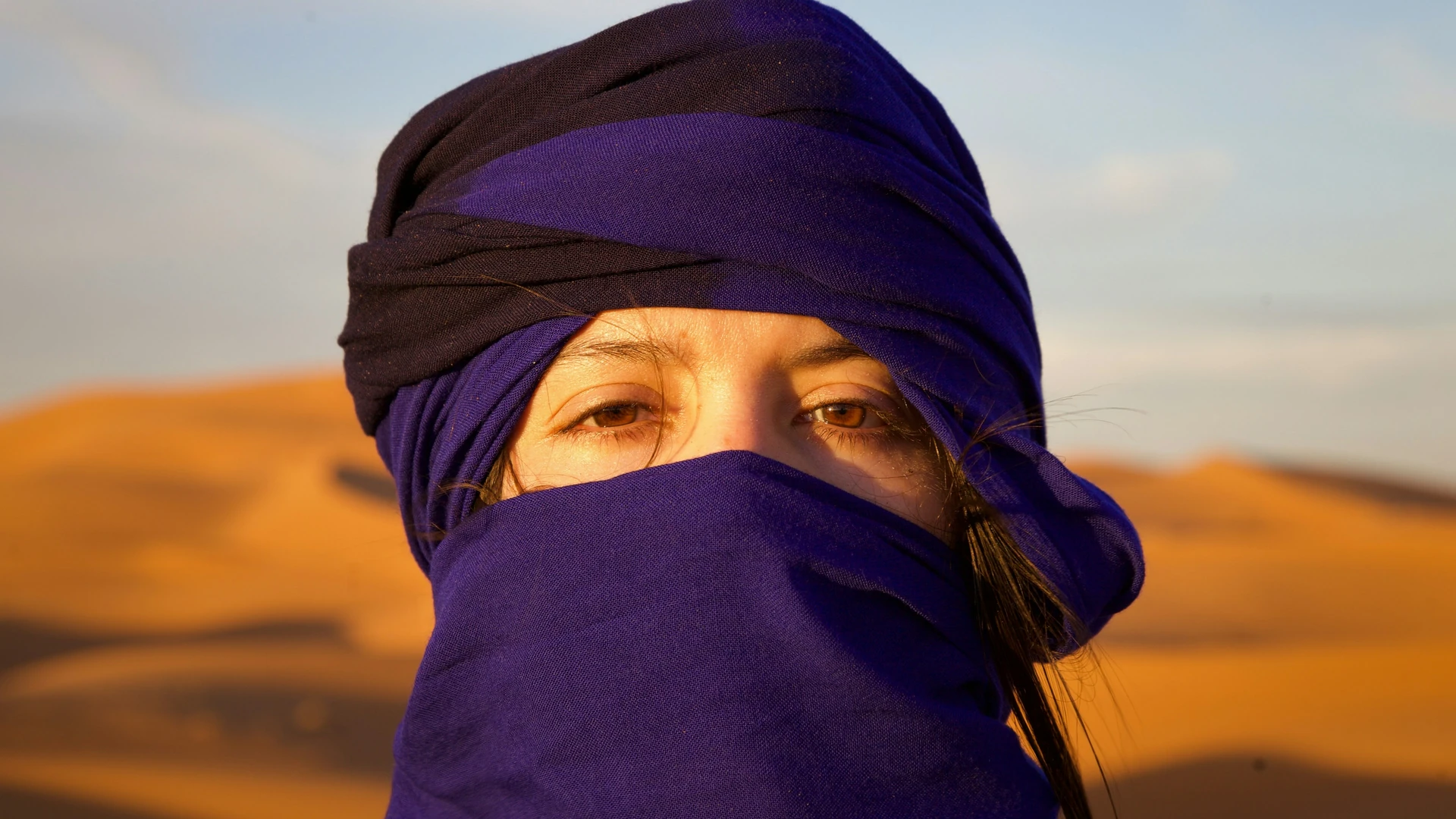
An erg is a sea of sand dunes — the term comes from Arabic and specifically describes this type of landscape, as opposed to the stony reg.
The Moroccan Sahara has two main ergs that are easily accessible to travellers: Erg Chebbi, near Merzouga, and Erg Chegaga, further south near Zagora.
Erg Chebbi formed through the accumulation of fine sand pushed by prevailing winds against a natural geological barrier, over thousands of years.
The sand that makes up the erg comes from far away: it was carried over hundreds of kilometres from source areas further south, before settling in this natural depression bordered by the reg, where the terrain traps it and prevents it from spreading further.
It is this localised accumulation that explains why the dunes stop almost abruptly at the edge of the village — the sand does not spread indefinitely, it concentrates in this particular pocket of the desert.
The rest of the surrounding area, barely a few kilometres away, reverts to a completely different landscape: stony plains, scattered palm groves, small rocky hills.
This stark contrast between the reg and the erg often surprises travellers who imagined a uniform desert stretching for hundreds of kilometres.
How high are the dunes really?
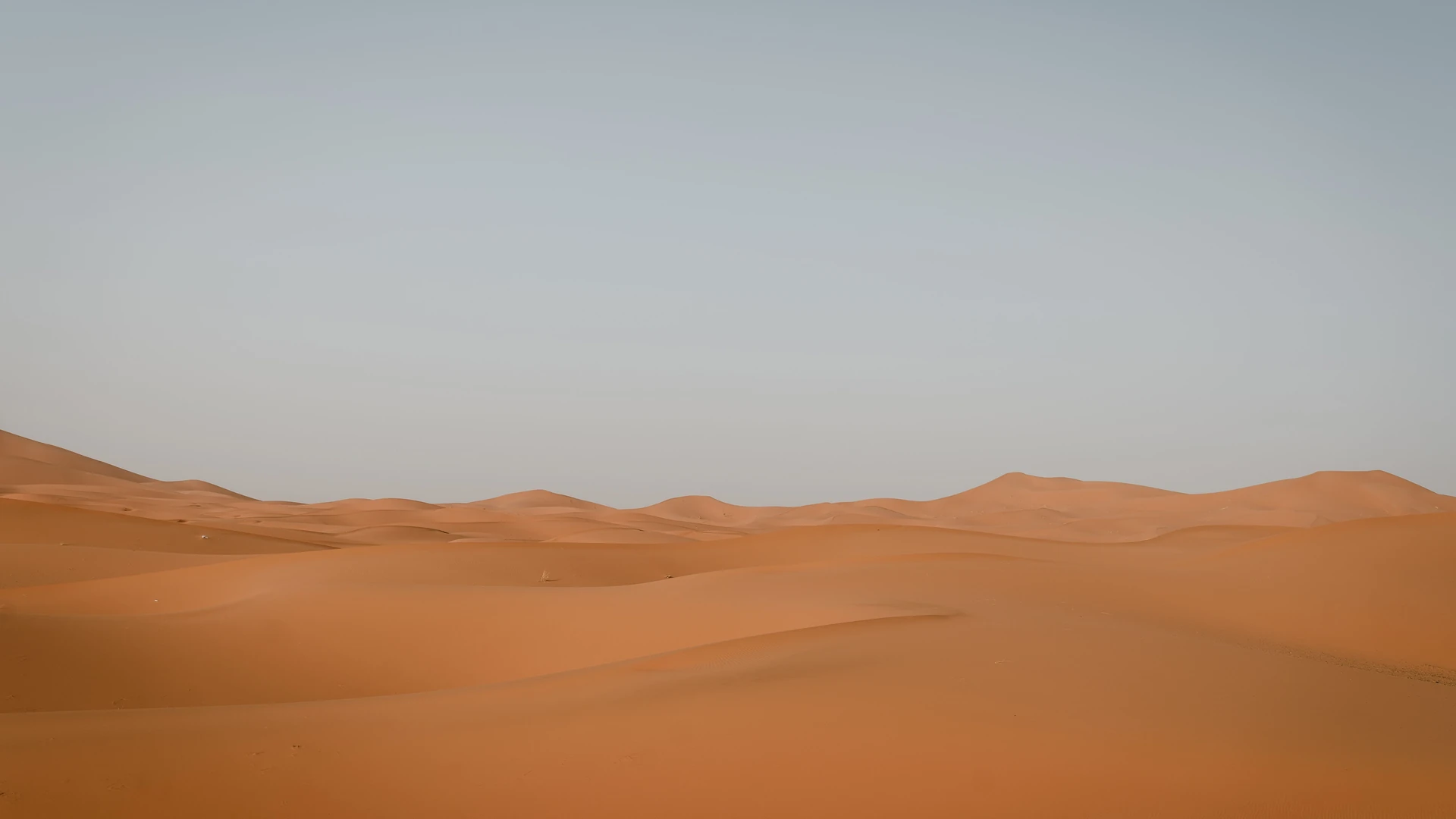
150 metres at the highest point, which places Erg Chebbi among the tallest dunes in Morocco.
This tallest dune even has a local name: Lbil, the landmark shown in most published photos of Erg Chebbi.
But this figure applies to only a few specific ridges, not the entire site.
Most of the dunes covered on a standard camel ride are between 30 and 80 metres — already enough to offer a true 360-degree panorama from the top, without requiring the longest climb.
The tallest dunes demand a more committed walk, often reserved for travellers staying several nights and specifically seeking out that viewpoint.
Is Erg Chebbi the largest desert in Morocco?
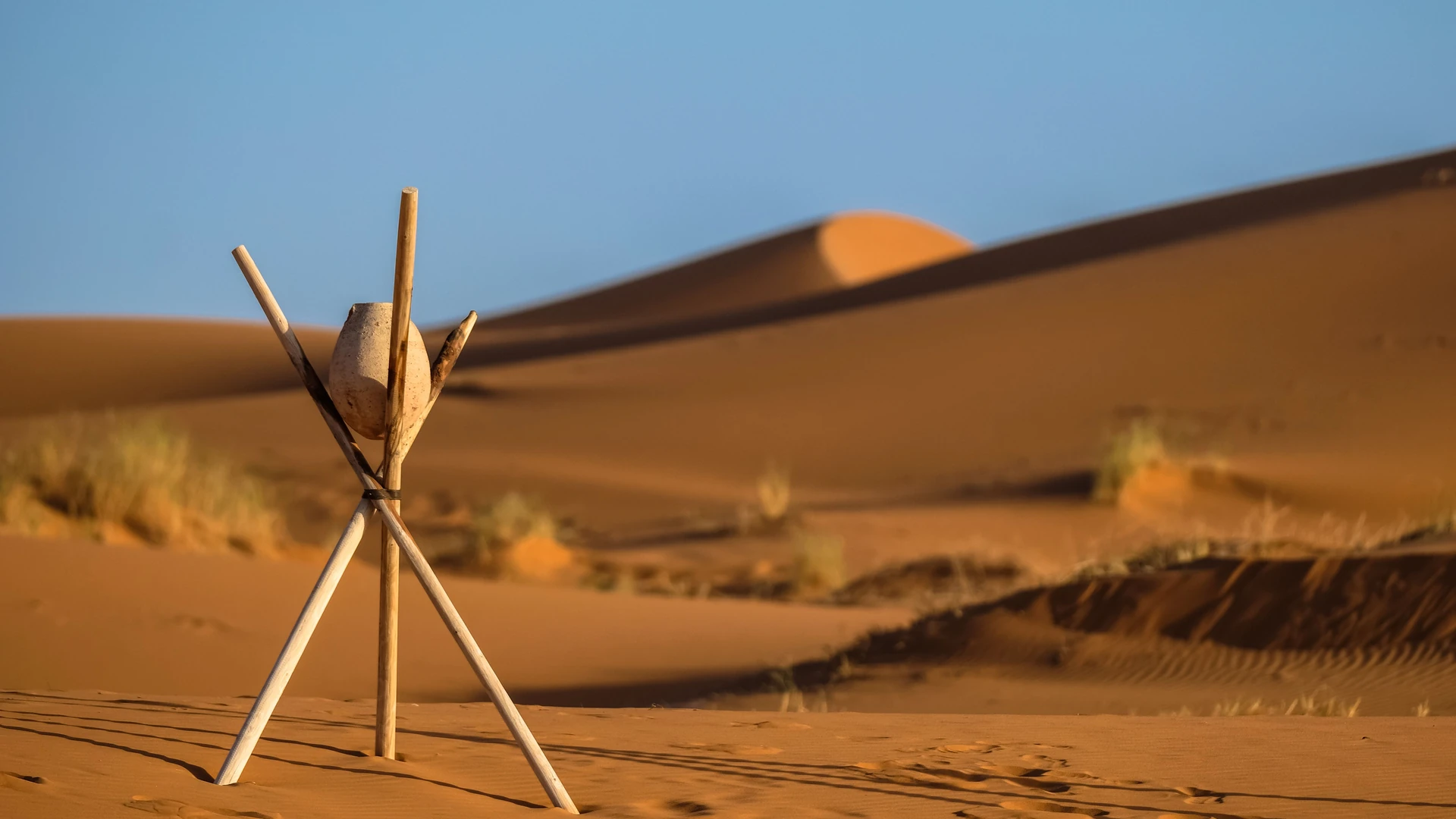
No, and this is a common confusion.
Erg Chebbi measures about 28 km long and 5 to 7 km wide — a modest area compared to Erg Chegaga, near Zagora, which stretches over 40 km.
What explains Erg Chebbi's popularity is therefore not its size, but its geographical position: roughly 560 km of road from Marrakech, compared to a significantly longer journey with less tourist infrastructure to reach Erg Chegaga.
For a first trip to the Sahara, this accessibility often weighs more heavily in the decision than the raw size of the dunes.
Can you walk freely in the dunes?
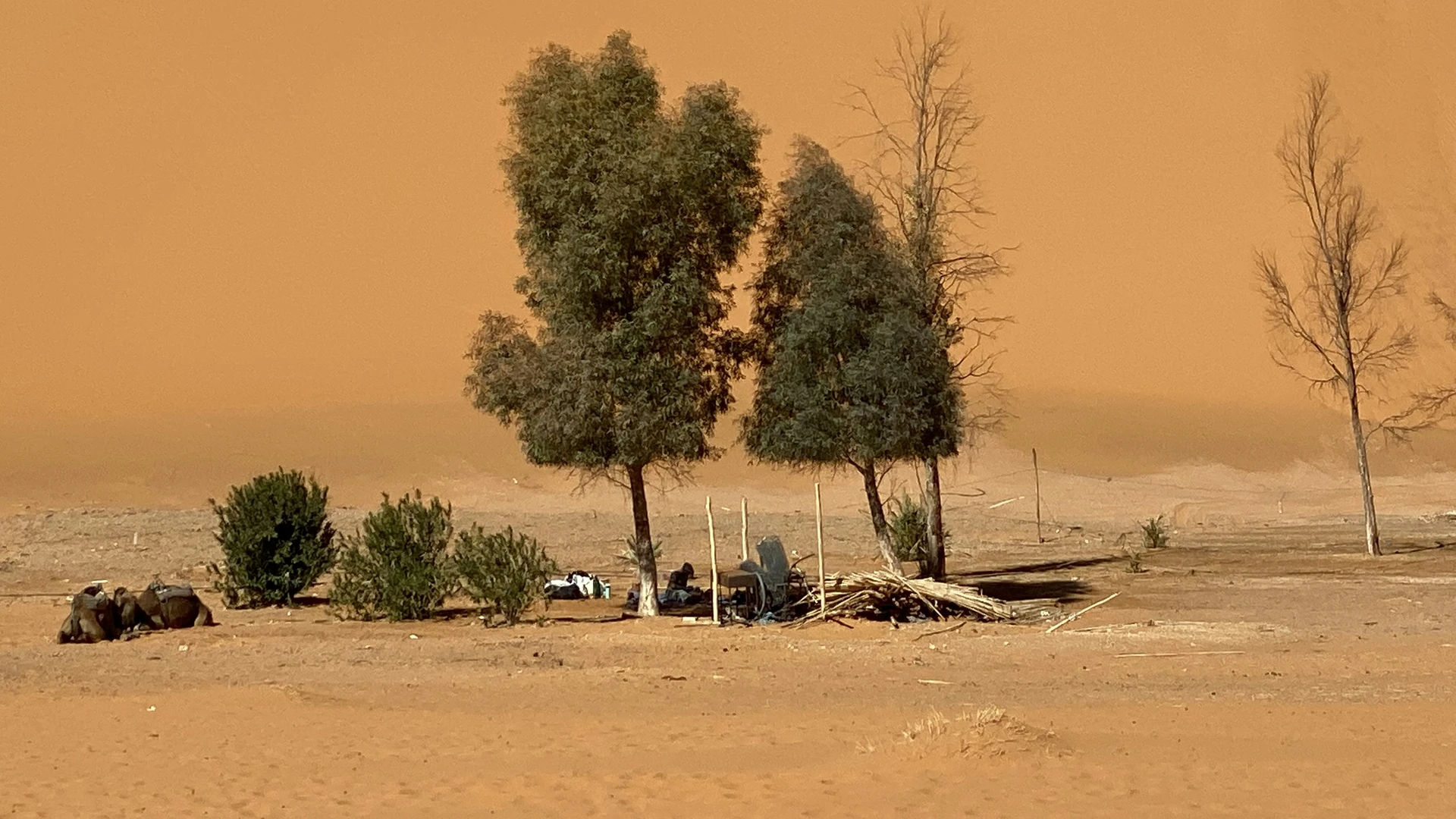
Yes.
Access to Erg Chebbi is free and open, with no ticket or opening hours — it is not a national park, just a natural landscape on the edge of the village.
Nothing prevents you from walking alone on the first ridges, particularly at sunrise or sunset.
That said, venturing far from known trails without a guide is not advisable: visual landmarks change quickly with the wind, and the daytime heat can catch you out within minutes.
According to the recommendations of the French Ministry for Europe and Foreign Affairs, it remains prudent to always inform someone of your itinerary before a prolonged walk in an isolated desert area.
Most travellers still opt for an accompanied walk, by camel or on foot with a local guide, rather than fully independent exploration.
This choice is not an imposed constraint: the guide knows the best viewpoints, adjusts the pace to the group's fitness, and often shares details about how the dunes formed that no signpost on site could provide.
How does the sand change throughout the day?
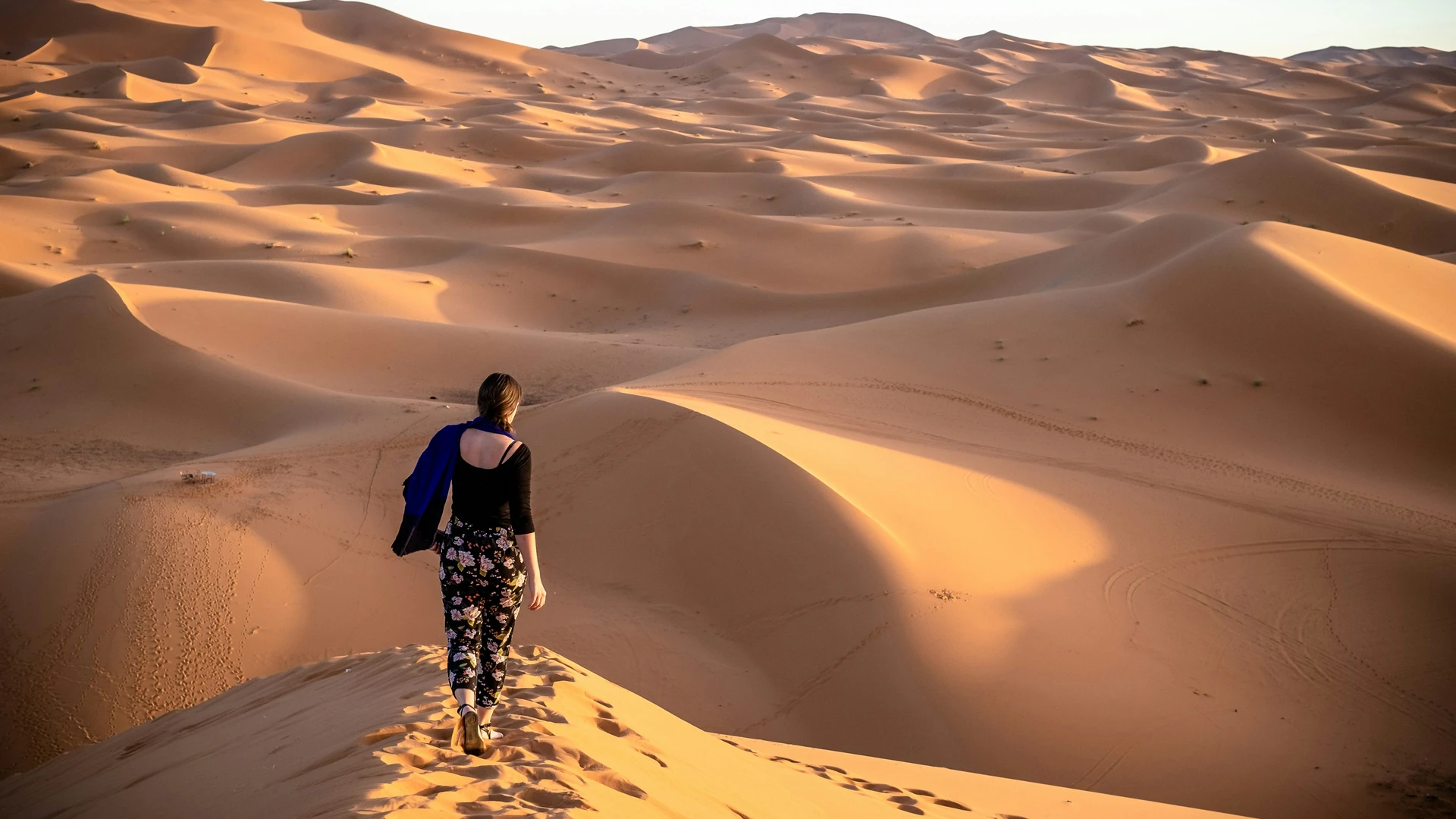
The colour of the dunes is never truly fixed.
At midday, under a vertical sun, the sand looks almost pale yellow, almost dull — this is when most published photos online lose all their depth, for lack of defined shadows.
As sunset approaches, the low-angle light reveals gradients of orange, then coppery red along the ridges, with deep shadows tracing every undulation of the terrain.
This light effect does not explain everything, however: the ochre-to-orange tint of the sand also comes from the presence of iron oxides in the grains, a common phenomenon in Saharan ergs that becomes visually more intense at sunrise and sunset.
It is this transformation, more than the height of the dunes themselves, that explains why most tours time the camel ride precisely for this late-afternoon window.
Walking or climbing in the sand: what should you expect?
Climbing a dune has nothing in common with a hike on solid ground.
Each step sinks slightly into the loose sand, and some of your energy is lost in that slip.
On the steepest slopes, the effort can almost double compared to an equivalent walk on stable ground.
The best time to climb remains early morning or late afternoon, when the sand has had time to cool — in the full heat, its surface can become uncomfortable under thin-soled shoes, let alone the extra physical effort.
What is the connection between the village of Merzouga and the dunes?
The village itself developed right on the edge of the erg, a fairly rare configuration that lets you see the first dunes from some main streets, without having to drive for hours to reach them.
This proximity has shaped the entire local economy around desert tourism — hotels, agencies, camel handlers — but it has not turned Merzouga into a town entirely devoted to visitors.
Local life continues in parallel, with its shops, its market, its residents who have nothing to do with tourism.
Is one visit enough, or should you go back?
Many travellers discover Erg Chebbi on a single two- or three-day visit, as part of a wider tour from Marrakech.
Others return, sometimes several times over several years, drawn by the ever-changing nature of the place: the wind constantly reshapes the ridges, so much so that no two visits are ever quite the same.
This sense of discovering a slightly different landscape each time, despite identical geographical coordinates, remains one of the least anticipated aspects of a stay at Erg Chebbi — and one of the reasons why a single night is rarely enough to see it all.
Practical tip
To truly get a sense of the scale of Erg Chebbi, plan at least one night on site rather than a few hours' visit.
The light makes all the difference between arriving in broad daylight and watching the sunset from the ridges.
Book Your Merzouga Tour on WhatsApp
Instant confirmation with no deposit required in advance.
Pick-up from your hotel.
Book Your Stay