
What essential Merzouga desert gear should you bring?
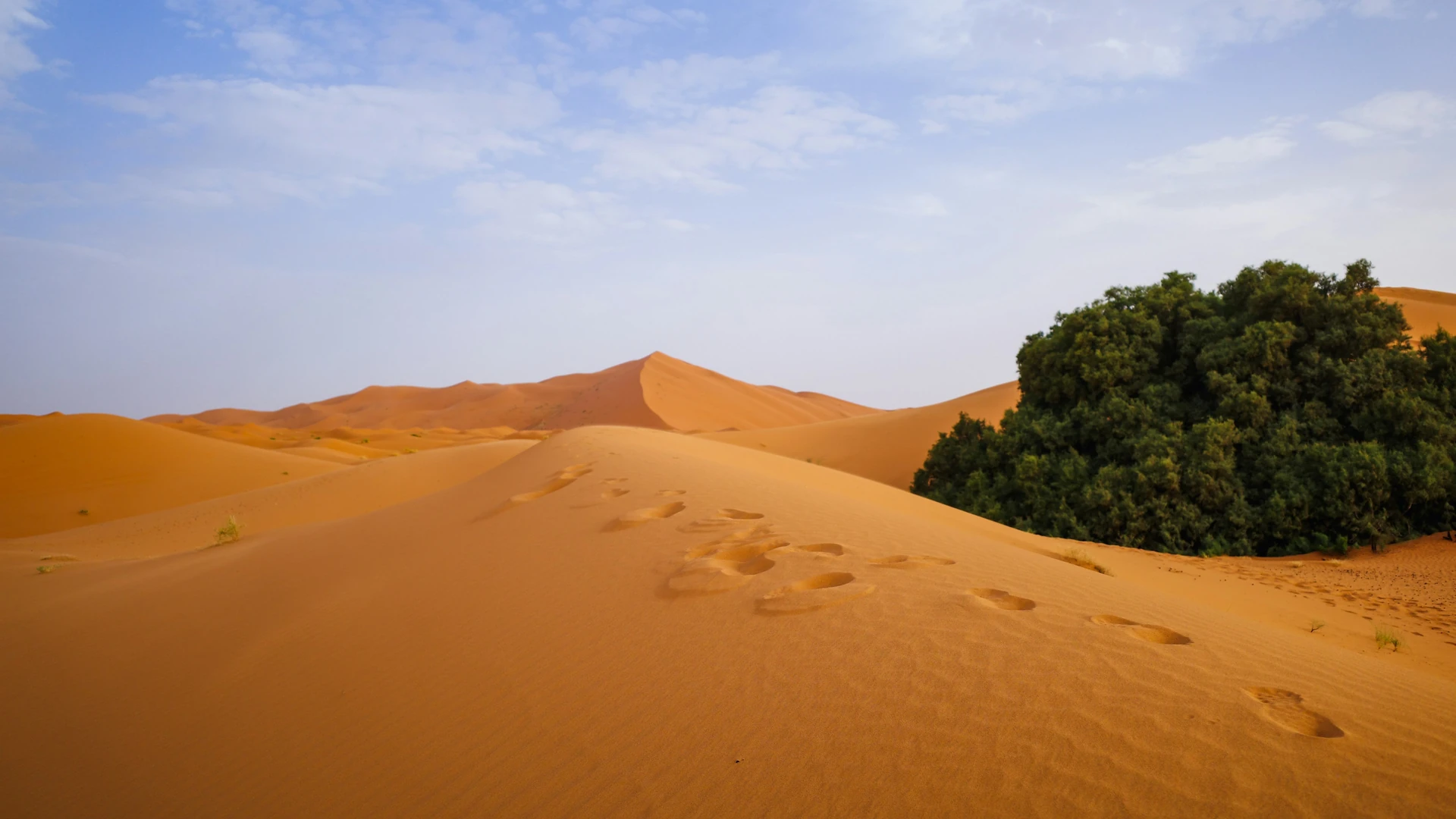
Quick answer: Essential Merzouga desert gear includes a cheche (cotton turban), category 3-4 sunglasses, high-factor sun cream, a warm jacket for the night, closed shoes and a reusable water bottle, to cover the daytime heat, sand wind and night-time cold of the Erg Chebbi dunes.
The temperature range is very wide: after a day at 25-35°C, night-time temperatures often drop below 10°C and can reach 5°C in winter (December to February), hence the need for a fleece, a beanie and a warm jacket even in the height of summer.
The Berber cheche, category 3-4 sunglasses, SPF 50 sun cream and lip balm form the essential trio against the Saharan sun and wind-blown sand; the cheche also protects your airways during light sandstorms.
For the camp, bring a headtorch, a power bank and wipes; for photography, protect your camera in a sealed bag against the fine sand of Erg Chebbi and bring a microfibre cloth, as the Sahara sky offers exceptional conditions for night photography.
Heading into the Merzouga desert and the Erg Chebbi dunes involves very specific climate conditions: intense daytime heat, a sharp drop in temperatures at night, sand-laden wind and limited shops once on site.
Good Merzouga desert gear directly determines the comfort of your stay, whether you are going on a one-night excursion or a 3-day tour from Marrakech.
Contrary to popular belief, you do not need to pack an entire suitcase: a few targeted items cover all the situations you will encounter, from walking on the dunes to a night at the camp under the stars.
This guide details, item by item, what to actually put in your bag before heading to Merzouga.
Does it really get cold at night, and how should you dress day and night?
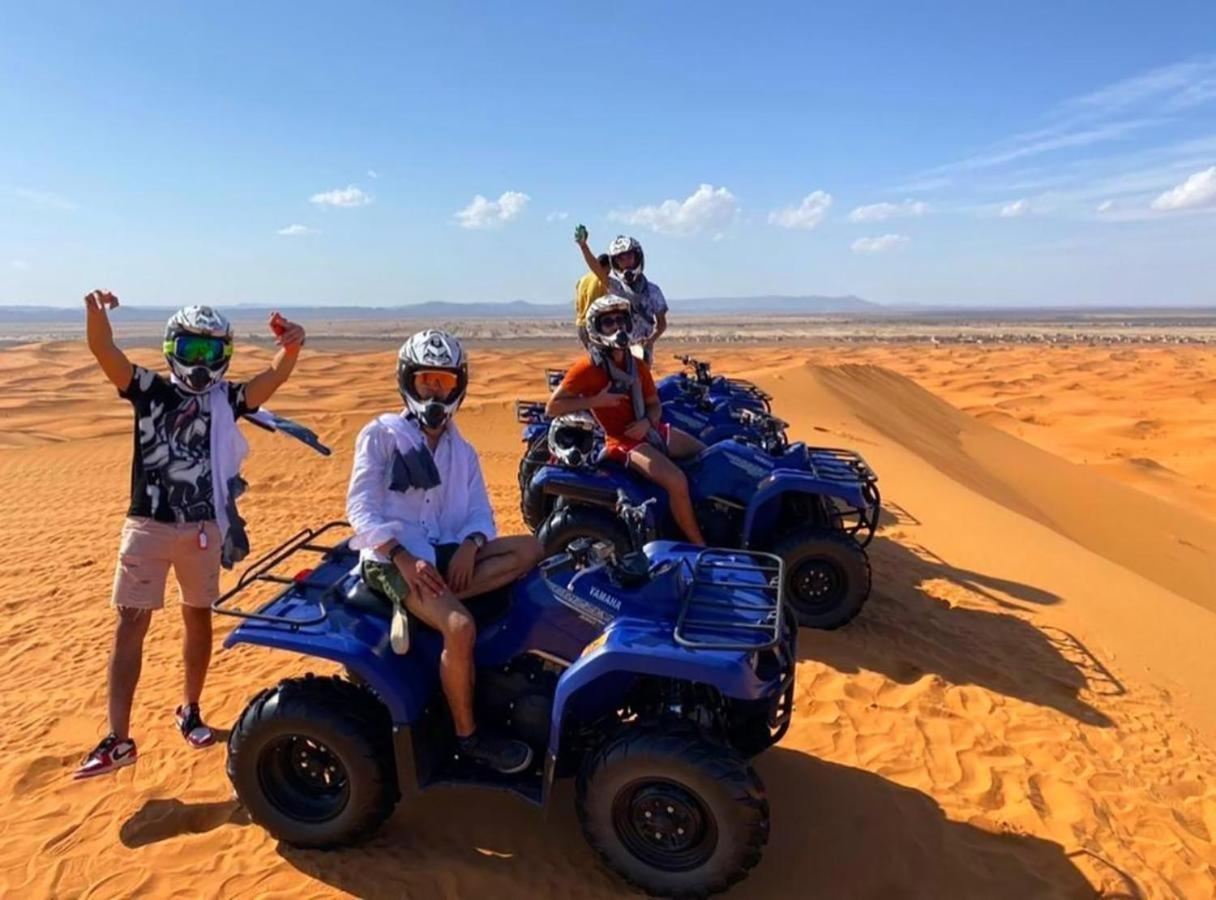
The golden rule in the Moroccan desert is layering.
During the day, favour loose, breathable cotton or linen clothing in light colours, along with a wide-brimmed hat.
Come evening, the temperature range can exceed 20°C: a fleece, a warm jacket and long trousers become essential, even between May and September.
In winter, nights in the dunes can drop to 5°C: bring a beanie and light gloves.
Adapt your packing to the exact dates of your stay, based for example on the climate data for southern Morocco published by the national tourist office (visitmorocco.com).
What protective accessories should you bring against sun and sand?
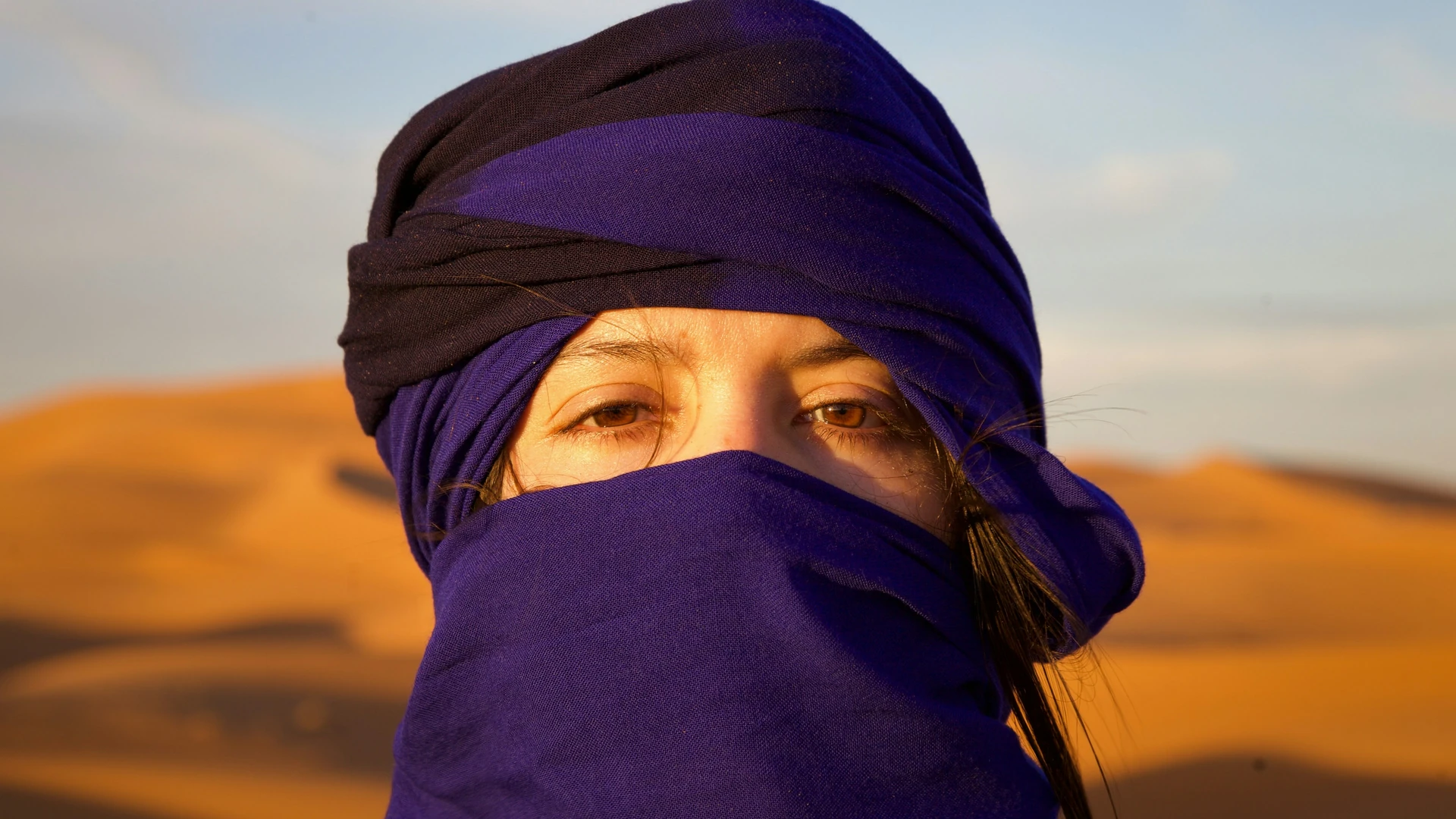
The Berber cheche is the iconic and most useful desert accessory: it protects against sun, wind and sand grains raised during light storms, common in the late afternoon on the dune ridges.
Our guides show you how to tie it properly at the start of the camel ride.
Also bring category 3 or 4 sunglasses, high-factor sun cream and lip balm.
To go further on health while on excursions, see our guide to safety and health in the Merzouga desert.
How do you protect your camera gear and what should you bring for the camp?
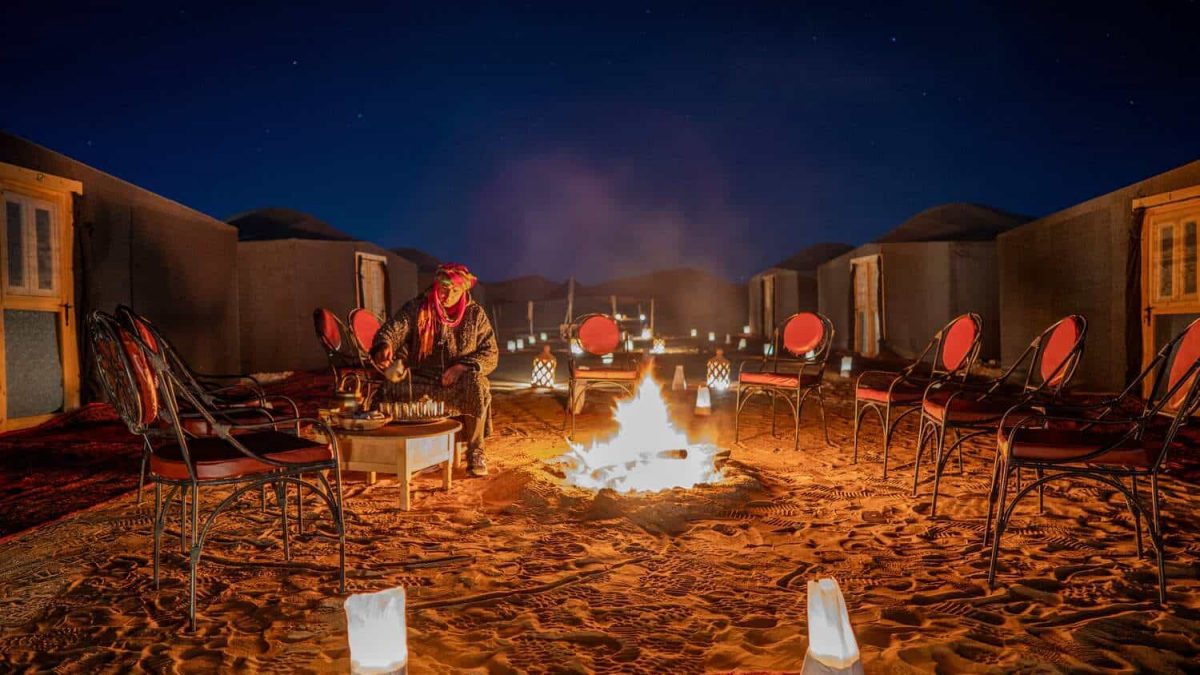
If you are staying at a camp, a few accessories make the difference: a headtorch, a power bank to charge your devices, and wipes.
Compare the equipment provided depending on the type of camp chosen, from traditional desert camp to luxury camp.
The fine sand of Erg Chebbi gets into camera mechanisms: protect your gear in a sealed bag and avoid changing lenses outdoors when it is windy.
The Sahara sky is one of the least polluted in the world, ideal for capturing the Milky Way from your camp.
Book Your Merzouga Tour on WhatsApp
Pick-up directly from your hotel in Marrakech.
No deposit required in advance.
Also see our Merzouga excursion from Marrakech to plan your departure.
Chat & Book Your Stay