
Marrakech and Merzouga are separated by 560 km of road — the question is never really "how many kilometres", but "how to cover them".
Three options exist, each with a genuinely different trade-off between price, comfort and freedom.
This guide compares them without favouring any by default, so the choice is based on your travel profile rather than a generic recommendation.
Option 1: the Supratours bus
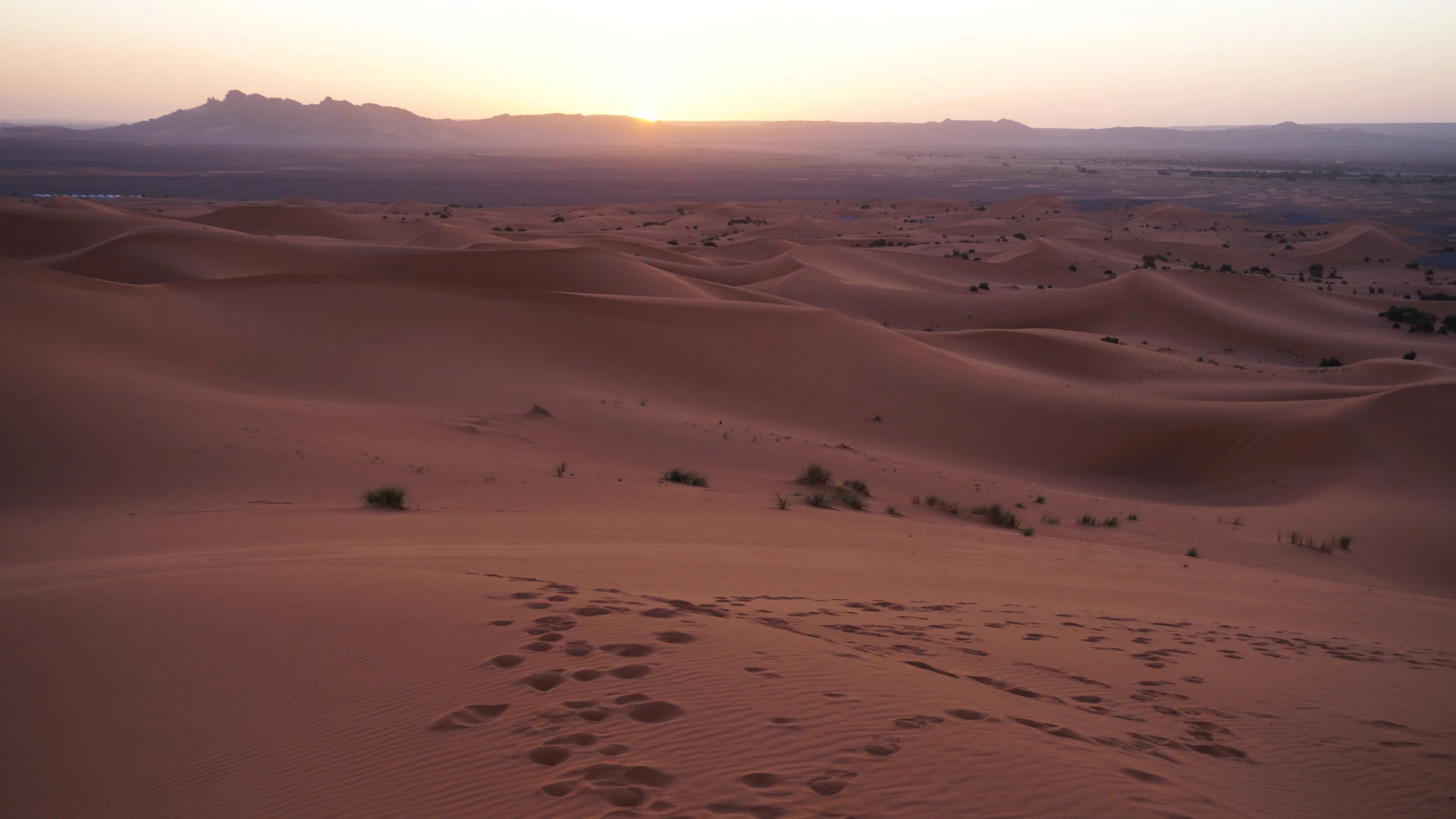
The Supratours company runs a direct service between Marrakech and Merzouga (or Rissani, with a local connection), generally as an overnight journey of about 10 to 11 hours.
It is the cheapest option, without question.
The trade-off is clear: the bus does not stop at tourist sites along the way — Ait Ben Haddou, the Dades and Todra Gorges remain invisible from the window of an overnight journey.
For a traveller on a tight budget in a hurry to arrive, it remains a reasonable solution.
The overnight journey also has an indirect advantage: it avoids losing an entire day of travel on the road, since you sleep during the journey rather than in a hotel.
The symmetrical downside is arriving tired the next morning, without the recovery margin that a proper overnight stop offers.
Tickets are easily booked online or at an agency in Marrakech, without needing to book weeks in advance outside peak periods (New Year, Moroccan school holidays).
Option 2: car hire
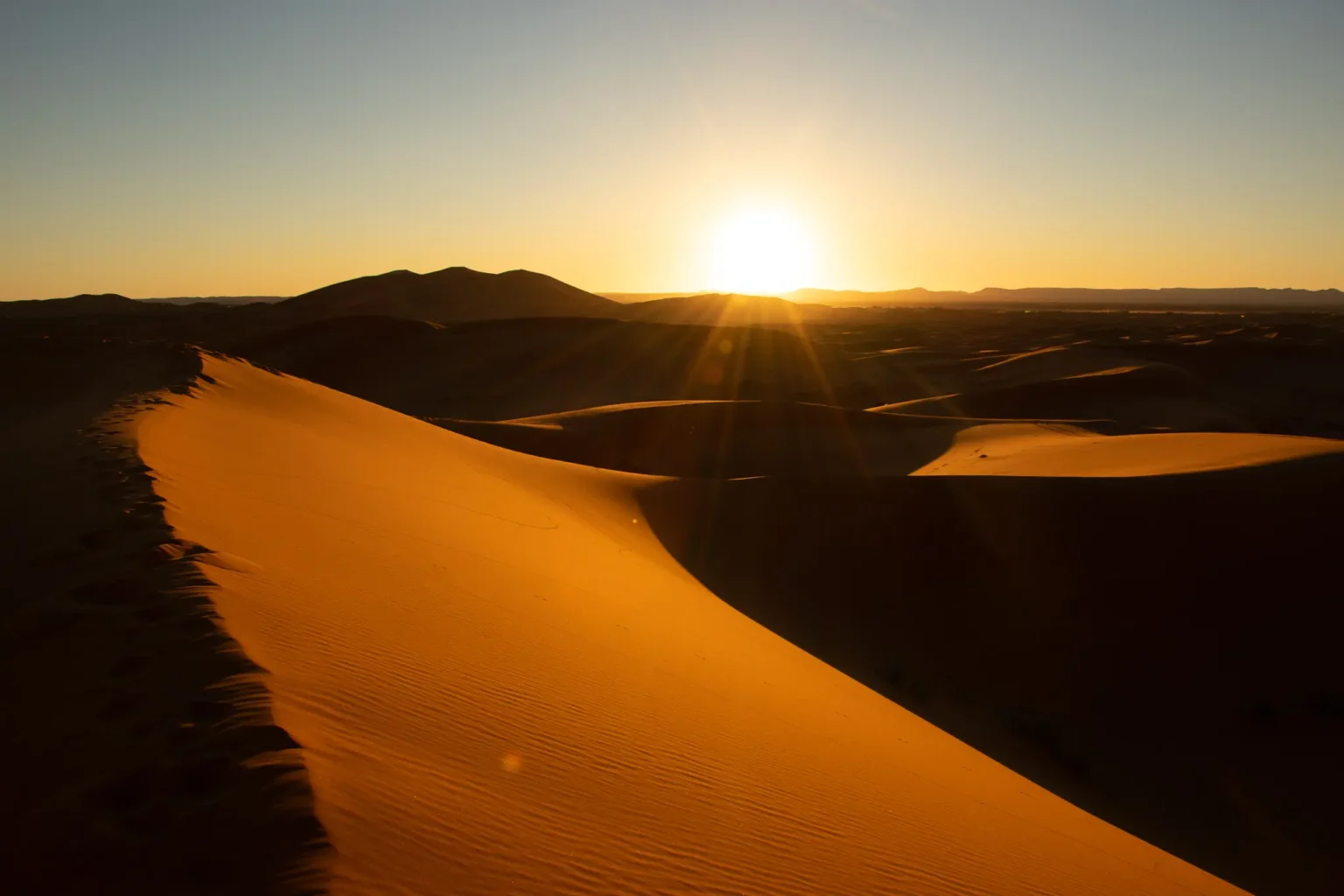
Hiring a car in Marrakech gives you complete freedom to stop where you want, when you want.
But the road via the Tizi n'Tichka pass, at 2,260 metres, has many mountain bends — manageable for an experienced driver, more demanding for those unused to this type of road.
The best habit is to plan a halfway stop (Ouarzazate or the Dades Gorges) rather than a direct journey in one day: driver fatigue on mountain roads builds up faster than you think, especially on the return.
Fuel remains regularly available along the main route, but becomes scarcer past Ouarzazate — a full tank before continuing to Merzouga avoids unpleasant surprises.
Mobile coverage, too, becomes patchy in mountain areas, making online GPS use difficult without a map downloaded in advance.
The return journey deserves the same caution as the outbound: after several days of desert and accumulated fatigue, the temptation to drive faster to get home sooner remains the main risk factor on this type of route.
According to the travel advice published by the French Ministry for Europe and Foreign Affairs, caution is advised on Moroccan mountain roads, especially at night — one more reason to favour daytime-only driving on this route.
Option 3: the private driver
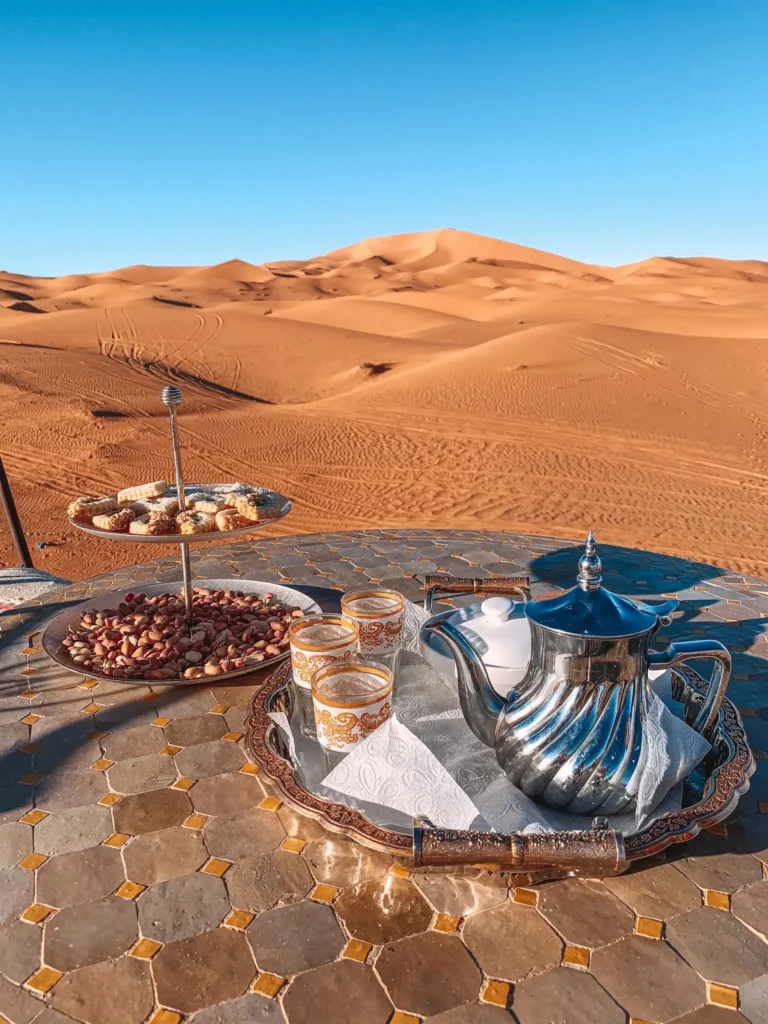
With a driver, the journey stops being a simple transfer and becomes a real tour: organised stops at Ait Ben Haddou, the Dades and Todra Gorges, without having to handle the driving yourself on a demanding mountain road.
The rate is quoted on request, and it is the option chosen by the majority of those discovering the region for the first time, precisely because it turns a two-day drive into a full part of the trip rather than a constraint to endure.
The driver also knows the best times to avoid crowds at the most visited sites, and can adjust the day's pace according to the weather or road conditions — a level of adaptation no bus or car hire booking can offer.
Which option for your profile?
For a very tight budget with no desire to stop along the way, the bus remains the simplest solution.
For independent travellers experienced in mountain driving, car hire offers genuine freedom, at the cost of heavier logistics.
For those who want to see Ait Ben Haddou and the gorges without the stress of driving, the private driver remains the most complete compromise — it is the option built into our desert tour from Marrakech.
There is no universal answer: a solo traveller with plenty of free time will enjoy the freedom of the bus or car more, while a couple or family with limited time will get more value from a driver who optimises every hour on the road into discovery.
For those truly short on time, our 3-day tour, from 80 € per person in a group, remains the most realistic option: in 2 days, you would need to cover about 8 to 9 hours of driving each way, at the expense of stops along the route.
What detail is often overlooked?
Whatever option you choose, the final stretch — from the village of Merzouga to the camp in the dunes — is almost always done separately, either by camel or by sand-capable vehicle.
Neither the bus, the hire car, nor even the private driver can drive directly onto the dunes themselves.
This is a point that surprises some independent travellers: after hours on the road, there is still one last stage, shorter but different, to reach the camp.
Better to anticipate it in your trip planning than to discover it on site, especially if arrival is planned at the end of the day.
For travellers by bus or hire car, most accommodation or camps arrange this final leg once you arrive in Merzouga — a simple message or call is usually enough to coordinate the final pick-up time.
Practical tip
Whatever option you choose, avoid scheduling an arrival in Merzouga after nightfall: the last few kilometres of track to the camp are much easier in daylight.
Book Your Merzouga Tour on WhatsApp
Instant confirmation with no deposit required in advance. Pick-up from your hotel.
Book Your Stay