
560 km separate Marrakech from Merzouga — but reducing this itinerary to a kilometre figure misses the point.
The road crosses a mountain pass, a UNESCO World Heritage fortified village, and two monumental canyons.
This guide details each stop, and why some deserve more time than others.
For travellers who prefer to loop their tour without backtracking, our Fès-Merzouga-Marrakech tour details how to cross Morocco through the desert between the two imperial cities.
The Tizi n'Tichka Pass
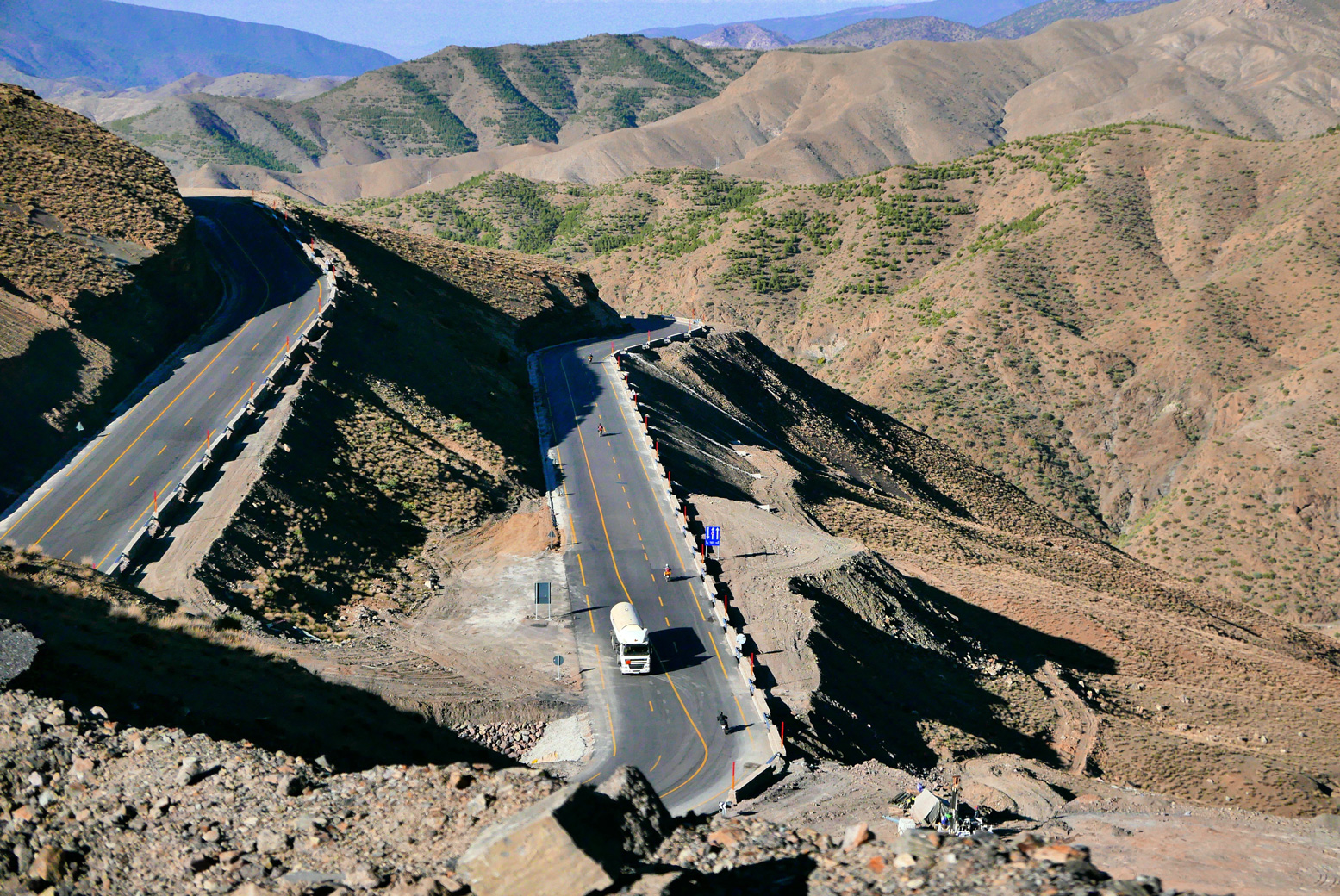
The first real stop of the journey, often underestimated before you get there.
The pass reaches 2,260 metres above sea level, with a winding road crossing the High Atlas over several dozen kilometres.
Photo stops here are numerous and spontaneous: local mineral vendors set up at the roadside, panoramas over deep valleys, sometimes snow on the peaks even outside winter.
This stop alone easily takes two hours with a few breaks.
The road itself remains impressive in its design: built in the 1930s, it is still today the main drivable route linking Marrakech to southern Morocco, despite its age and numerous hairpin bends.
The Ksar of Ait Ben Haddou
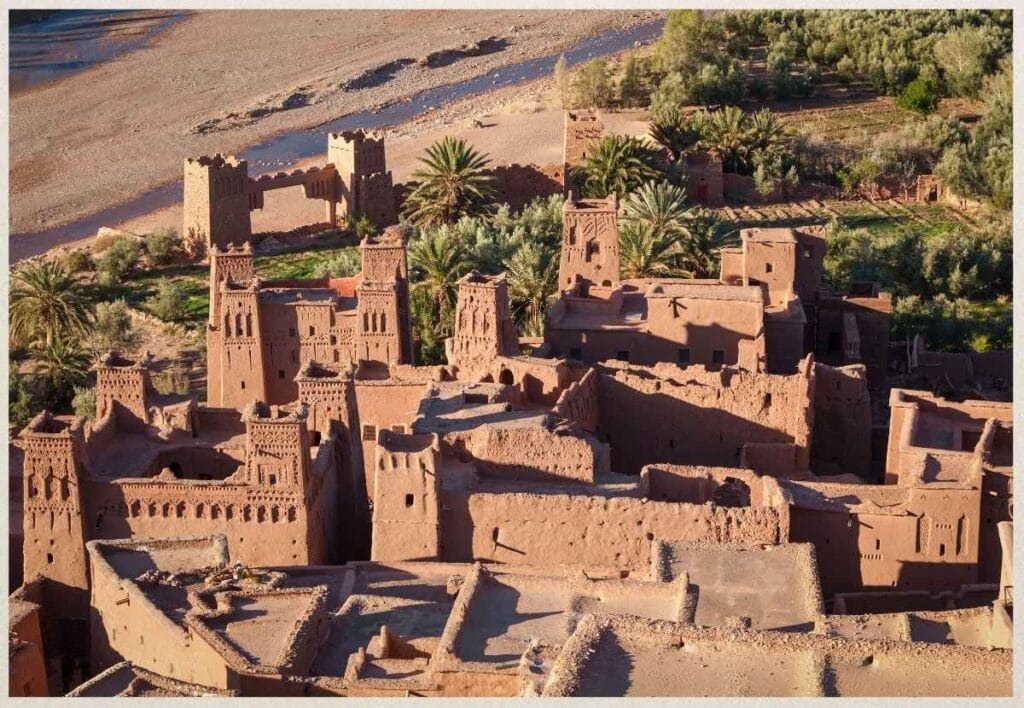
The richest cultural stop on the entire itinerary.
This mud-brick fortified village, listed as a UNESCO World Heritage Site, has served as a backdrop for several international film productions.
Unlike Tizi n'Tichka, Ait Ben Haddou deserves a proper guided visit rather than a quick photo stop from the car park: understanding the site's history, the mud-brick construction technique, and climbing to the top of the citadel for the panoramic view completely changes the experience.
According to the official UNESCO World Heritage Centre listing, the site bears witness to a traditional building method that has remained virtually unchanged for centuries — a detail that gives the visit a whole new dimension once you know it.
Ouarzazate and the Valley of Roses
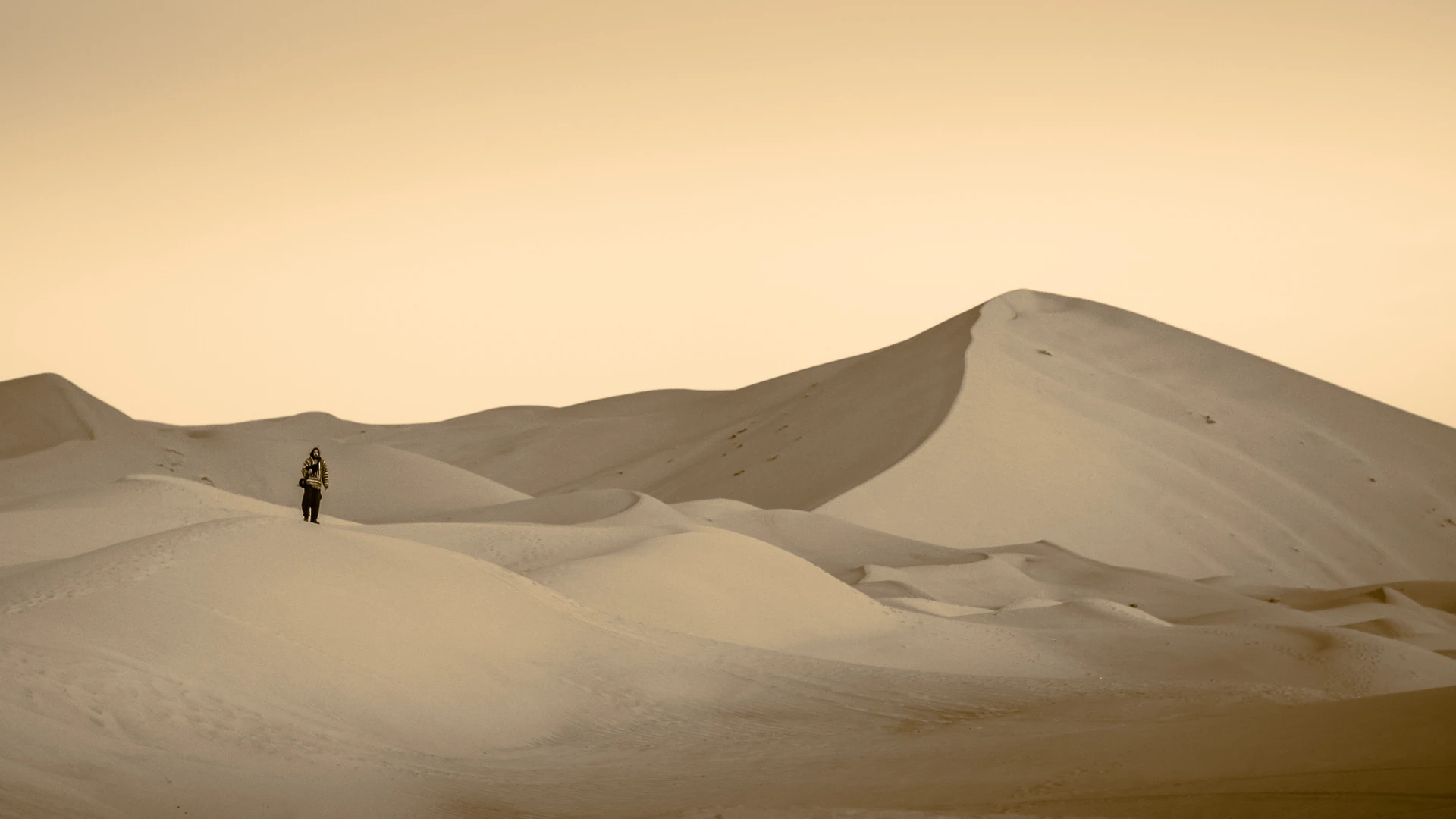
Ouarzazate, often nicknamed the gateway to the desert, is passed through quickly but remains a useful landmark for fuel and last-minute shopping before the more isolated stretch of road.
The Valley of Roses, just after, offers an unexpected contrast: rose fields cultivated on the mountainside, an image that jars with the aridity of the surrounding reg.
A short stop, but worth the detour in spring during the flowering season.
Ouarzazate is also home to several film studios that have hosted international shoots, making the most of the region's distinctive light and the diversity of the surrounding natural scenery — a detail that explains the regular presence of production crews on this stretch of road.
The Dades and Todra Gorges
Two canyons, two different atmospheres.
The Dades Gorges offer eroded rock formations, almost sculpted, winding along the road.
The Todra Gorges, even more spectacular, feature limestone cliffs over 300 metres high flanking a cool river.
Both deserve a real walk, not just a vehicle stop: it is only by going on foot between the walls that you truly feel the scale of these canyons, impossible to grasp from the road.
The Tinghir palm grove, just before the Todra Gorges, also deserves a stop: a long ribbon of green stretching at the foot of the cliffs, fed by the waters of the river descending from the mountain range.
How to prioritise your time between stops
Not all stops are equal in interest, and wanting to stop everywhere dilutes the experience rather than enriching it.
Ait Ben Haddou and the Todra Gorges remain the two stops that justify the most time, especially on a first trip.
Tizi n'Tichka and the Valley of Roses work very well as short stops — ten to twenty minutes are generally enough to grasp the essentials without excessively slowing your progress towards Merzouga.
A good practical benchmark: on a three-day itinerary, the first day naturally absorbs Tizi n'Tichka, Ait Ben Haddou and Ouarzazate, while the second is devoted to the Dades and Todra Gorges before arriving in Merzouga.
This breakdown avoids cramming everything into a single already-packed day.
What this itinerary reveals about Morocco
Beyond the list of stops, this journey crosses very different landscapes and cultures in just a few hours: Berber mountains, mud-brick architecture, irrigated palm groves, rocky canyons — a diversity that few road journeys in the world can show in so little time.
It is this accumulation of contrasting stops, more than the final destination alone, that makes this journey memorable for most travellers who take it — Merzouga is its culmination, but rarely the only lasting memory of the trip.
Practical tip
Bring small-denomination cash for informal stops along the road — mineral vendors, dried fruit stalls — bank cards are never accepted there.
Book Your Merzouga Tour on WhatsApp
Instant confirmation with no deposit required in advance.
Pick-up from your hotel.
Book Your Stay