The Merzouga nomads perpetuate an ancestral way of life shaped by centuries of adaptation to the desert.
Between camel-hair tents, goat herding and legendary hospitality, these Berber families offer travellers an authentic window onto Saharan culture, just a few kilometres from the Erg Chebbi dunes.
This cultural encounter combines naturally with an evening in Khamlia and its gnawa music or a discovery of traditional desert cuisine.
To deepen your knowledge of Moroccan Berber culture, the Moroccan National Tourist Office offers supplementary resources.
Are there still nomads around Merzouga today?
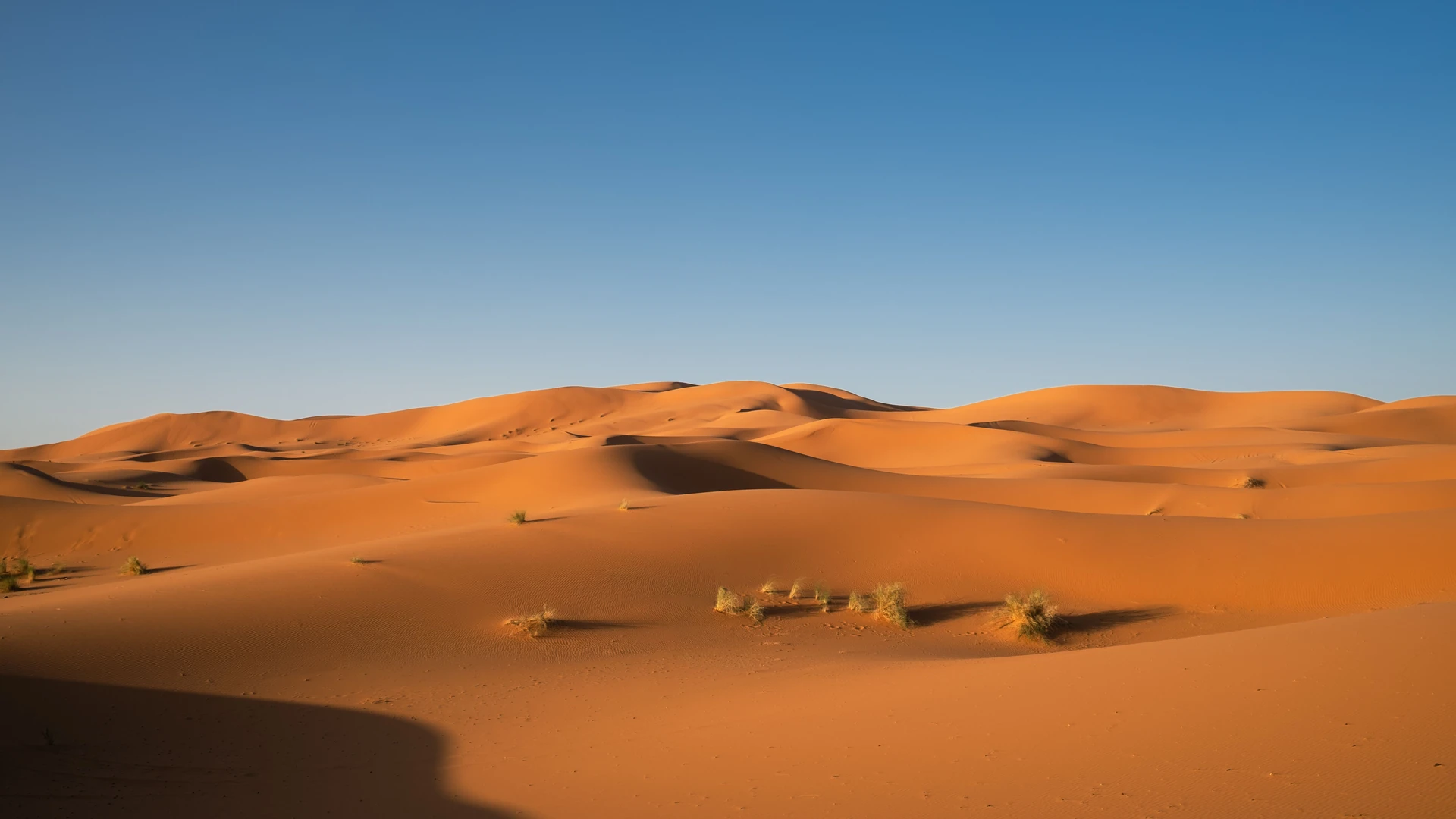
For generations, the nomadic peoples of the Erg Chebbi region have organised their lives around finding grazing land and water sources for their herds of goats and camels, moving with the seasons according to available resources.
This way of life, while largely preserved, has evolved in recent decades: many families now combine seasonal movements with semi-permanent settlement near fixed water sources or villages like Merzouga, while keeping the essential traditions of their culture.
What is a traditional nomad tent made of?
The traditional nomad tent, called a khaima, is the heart of Saharan Berber dwelling.
Woven from goat or camel hair, it offers effective protection against sand wind and the extreme temperature swings between the scorching day and the cool desert night.
The interior of the khaima follows a precise layout, with distinct zones for family life, tea preparation and rest, reflecting a social structure and codes of hospitality passed down from generation to generation.
What does the Berber hospitality and mint tea ritual involve?
Receiving a visitor, even a stranger, is governed by a code of honour deeply rooted in Saharan Berber culture.
The mint tea ritual, served in three successive rounds according to a precise measure, symbolises this welcome and paces the exchange between hosts and travellers.
This moment of sharing is often accompanied by traditional bread baked directly under hot sand or in an earthen oven called an afarnou, an ancestral cooking technique perfectly suited to the absence of modern infrastructure in the desert.
How do the nomads of the Merzouga region make a living today?
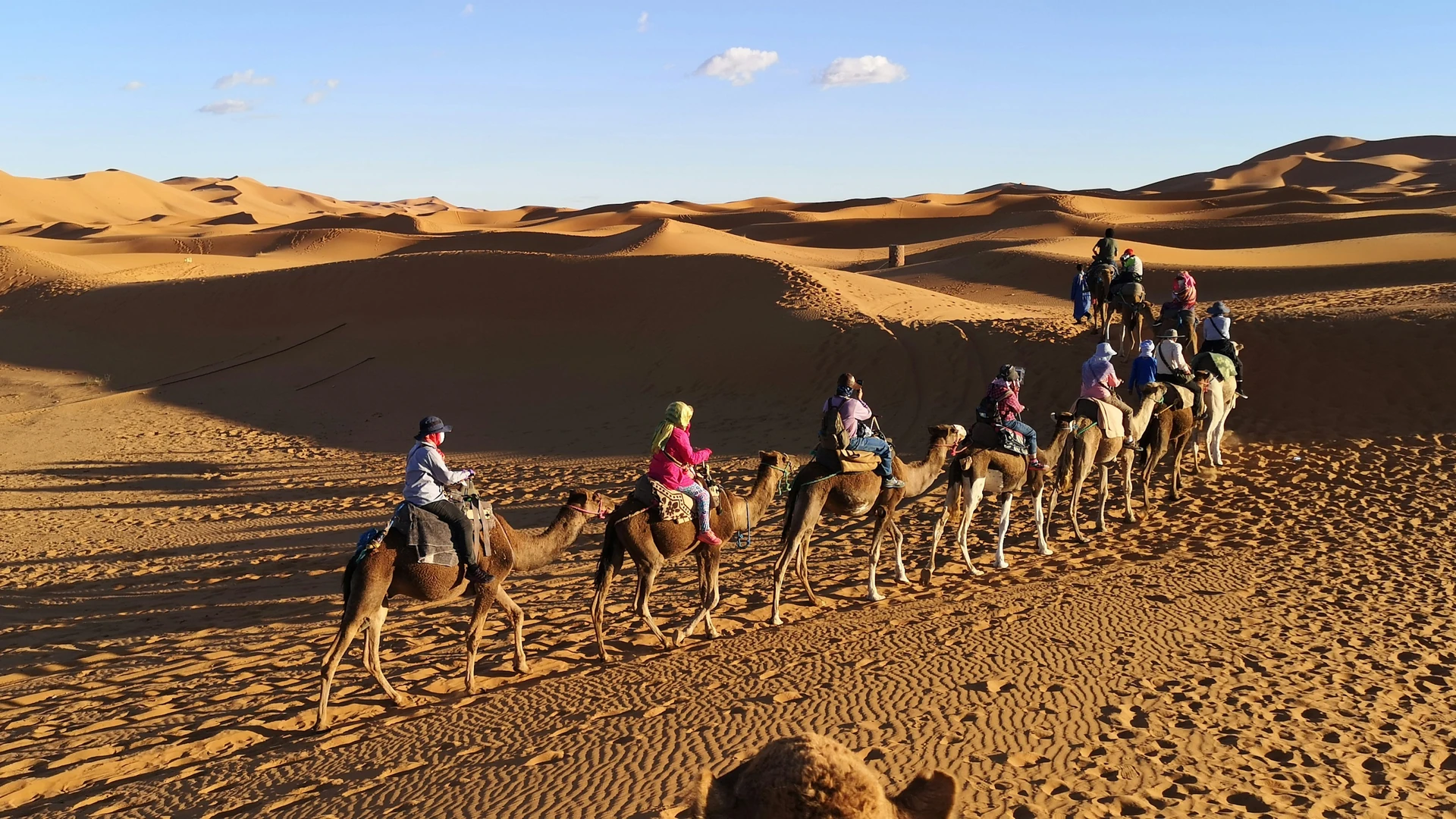
Goat herding and above all camel ownership still structure the economy of many nomadic families in the region, these animals historically serving for transport, milk and meat, essential for survival in a desert environment.
Tourism development in the Merzouga region has gradually added a new source of income: hiring out camels for treks to the Erg Chebbi dunes, allowing some families to diversify their activities while keeping their traditional herds.
Can you visit a nomad tent near Merzouga?
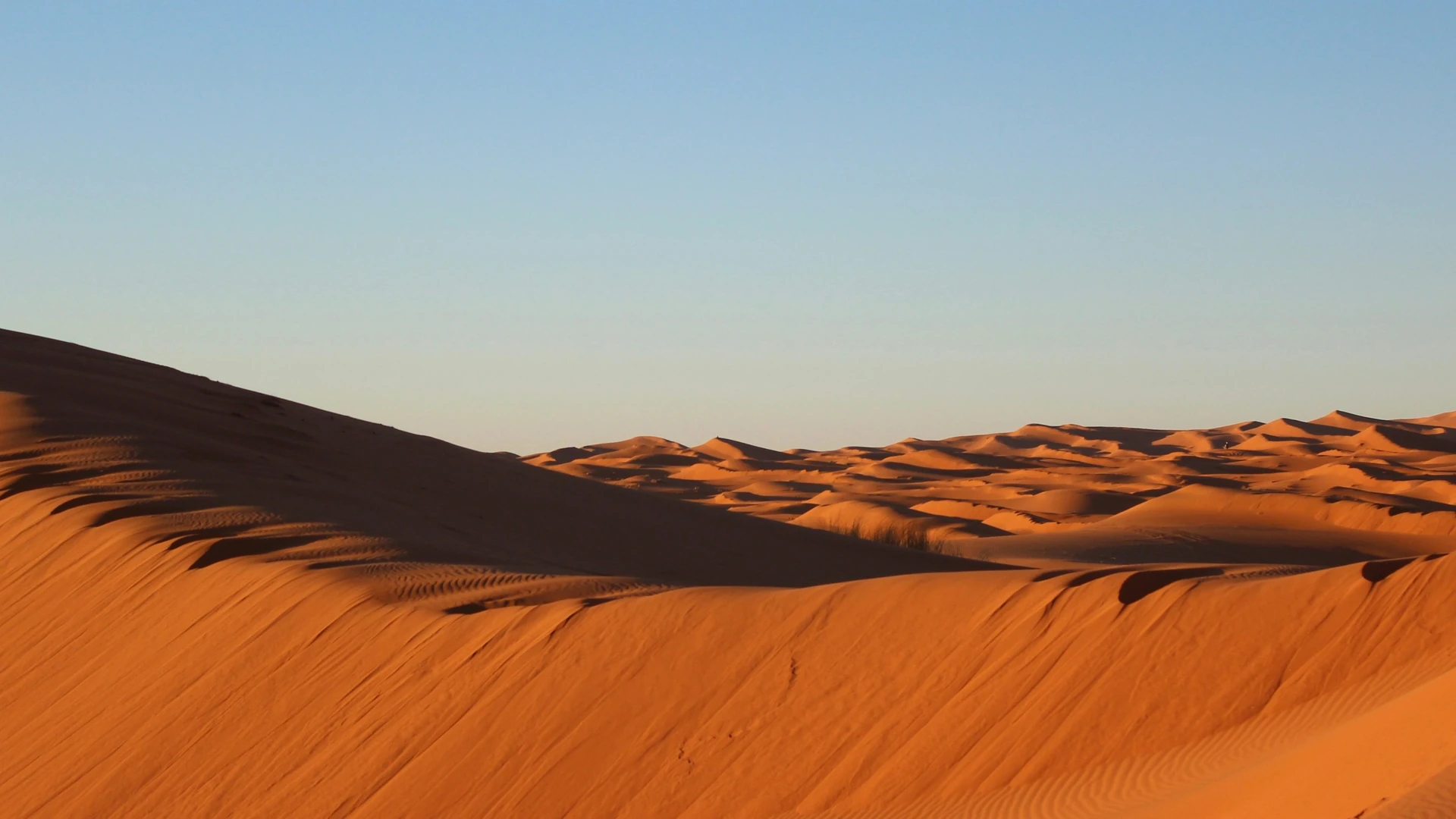
Many organised tours from Merzouga include a stop at a family camp, allowing a direct and respectful exchange with a nomad family, often as part of a tailor-made private excursion.
It is recommended to go through a local guide who knows the families, to ensure a visit that respects traditions and is genuinely beneficial economically for the residents, rather than an imposed or artificial encounter.
Some guides extend the outing to the seasonal lake of Dayet Srji when the season allows, offering another face of the desert between encounters with nomad families.
Local guides' tips
For an authentic encounter with the Merzouga nomads, choose a visit organised through a trusted guide, bring a small useful gift (tea, sugar) rather than cash directly, and take time to chat without rushing the conversation.
Book Your Merzouga Tour on WhatsApp
Instant confirmation with no deposit required in advance.
Pick-up from your hotel.
Book Your Stay