
Khamlia village is one of the most distinctive cultural sites in the Merzouga region.
Home to the Gnawa community, descended from sub-Saharan slaves, this small village 12 kilometres south of Erg Chebbi perpetuates a musical and spiritual tradition unique in Morocco.
Often included in tours to the Erg Chebbi dunes, Khamlia is best visited at the end of the day, after a camel ride or a session of discovering nomadic desert culture.
To place Khamlia within a complete itinerary, the Moroccan National Tourist Office offers useful resources on the Tafilalet region.
What is the origin of the Gnawa community in Khamlia?
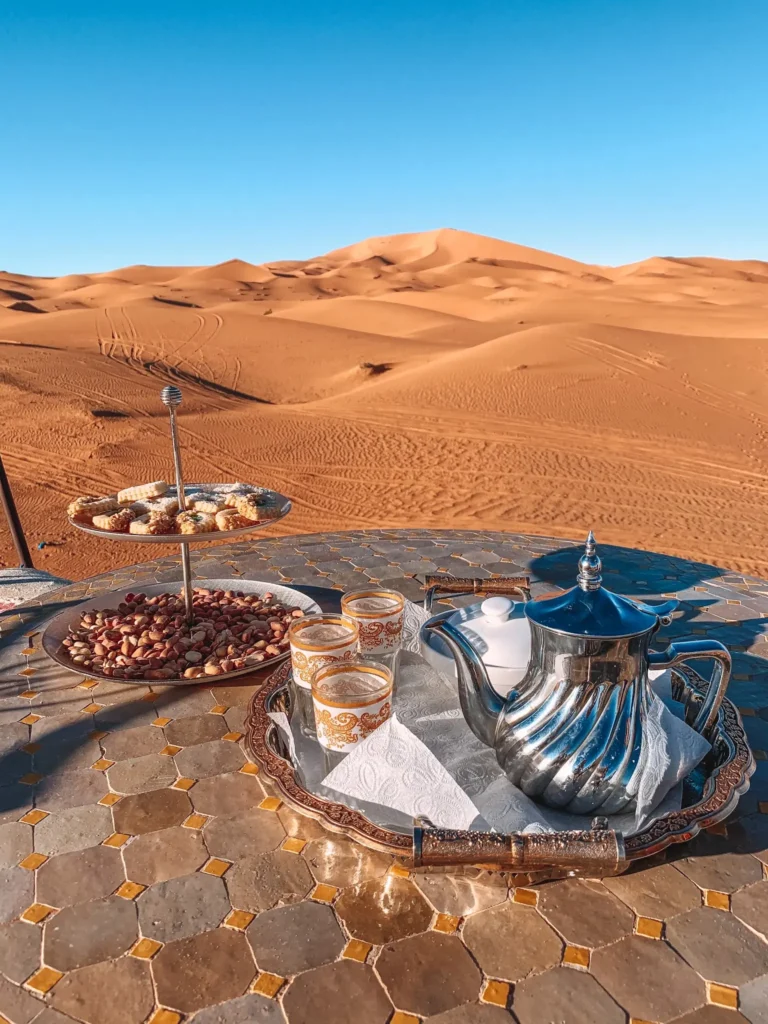
Founded by descendants of slaves from West Africa brought to Morocco via the trans-Saharan caravan routes, Khamlia village has perpetuated a distinct cultural identity for generations, blending spirituality, African rhythms and local Berber traditions assimilated over the centuries.
This painful history gave rise to a musical culture now recognised by UNESCO as intangible cultural heritage of humanity, under the broader heading of Moroccan gnawa rituals.
Khamlia remains one of its most authentic strongholds in south-eastern Morocco.
What instruments and tradition carry gnawa music?
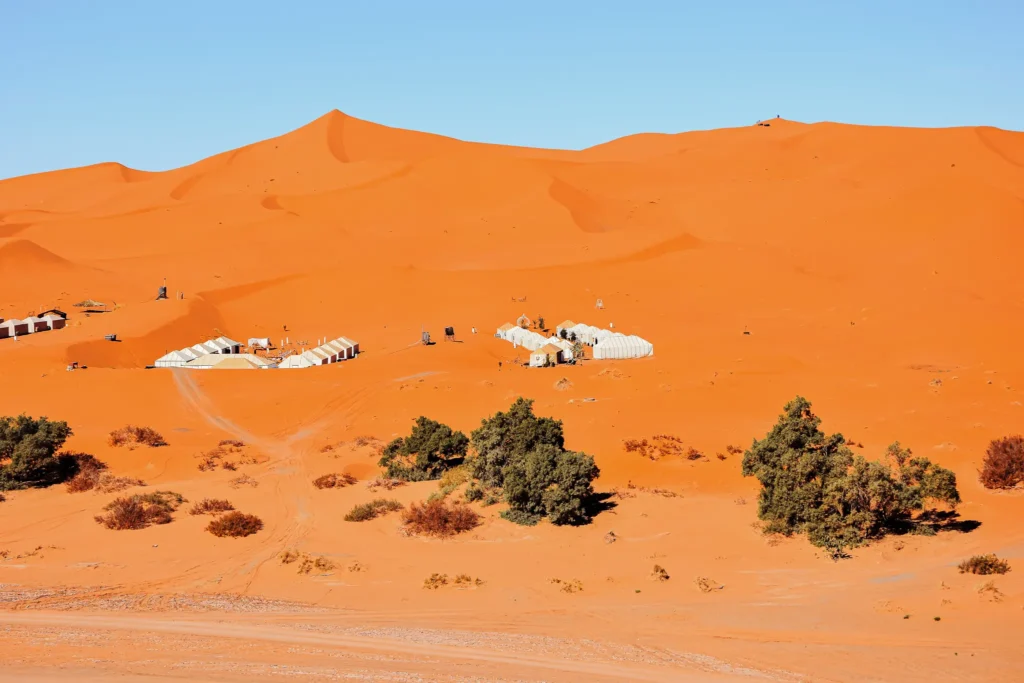
Gnawa music rests on three iconic instruments: the guembri, a three-stringed bass lute covered in camel skin whose deep tone structures the melodies, the qraqebs, metal castanets that rhythm the trances with their characteristic metallic clacking, and the tbel drums that sometimes accompany the most solemn ceremonies.
Historically linked to lila ceremonies, night-time rituals of spiritual healing, this music has gradually opened up to visitors in a more accessible concert format, while retaining its characteristic rhythmic and hypnotic intensity.
Where can you see a gnawa music concert in Khamlia?
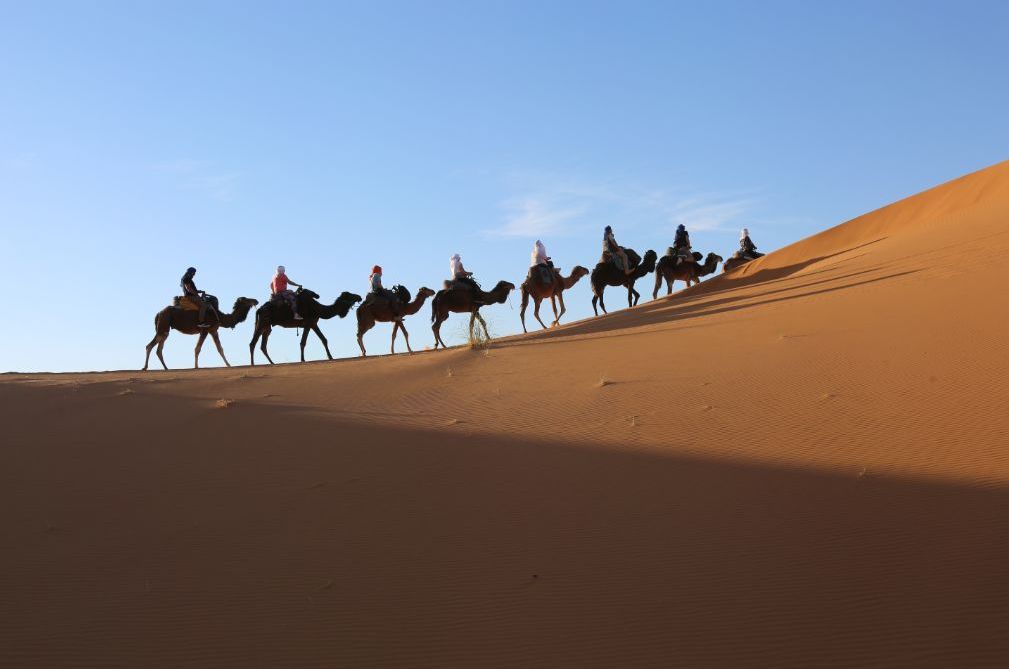
The local group Pigeons du Sable regularly welcomes visitors for improvised musical sessions at the end of the day.
Seated in a circle on rugs, the musicians perform call-and-response songs and hypnotic rhythms, often inviting the audience to join in by clapping or dancing.
The intimate atmosphere of the small candlelit room contrasts with the immensity of the surrounding desert and offers a powerful moment of cultural connection, especially appreciated alongside a night in a desert camp in the Erg Chebbi dunes.
What is daily life and local craft like in Khamlia?
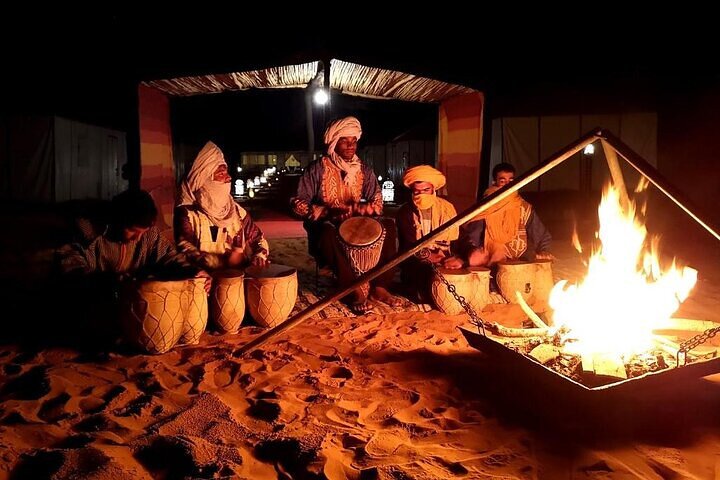
Beyond the music, Khamlia remains a modest farming village where residents tend small plots of date palms on the edge of the desert and practise quiet textile crafts, far from the tourist bustle of larger souks such as Rissani.
Curious visitors can observe an authentic rural way of life, very different from the hustle of more touristy areas, and chat with residents who are often delighted to share their history and musical traditions.
How do you visit Khamlia from Merzouga?
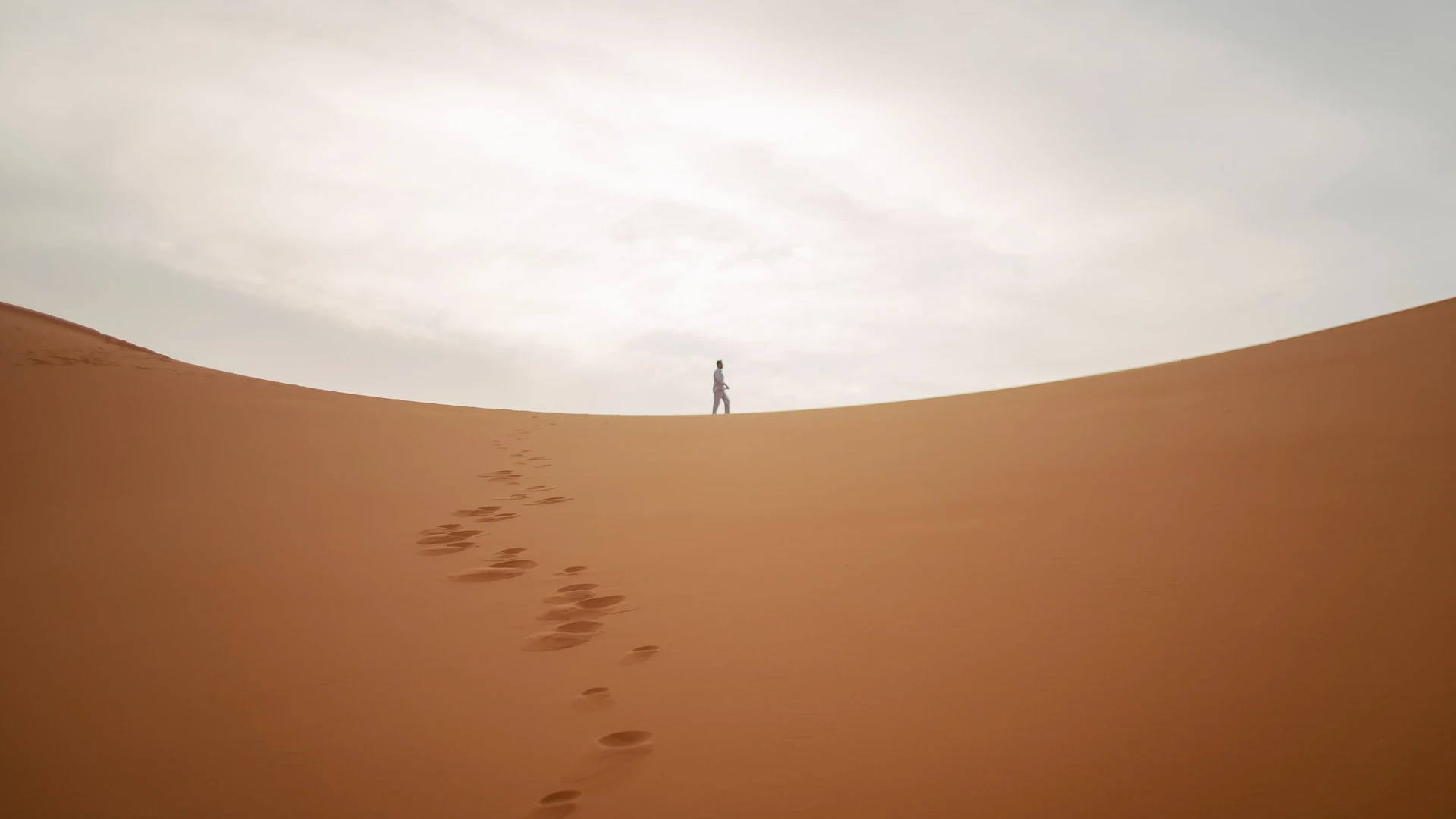
Khamlia lies 12 kilometres south of Merzouga, on the edge of the Sahara, accessible by a dirt track suitable for a minivan or adapted minibus.
Most local agencies include it in a private Merzouga excursion combining sunset, a gnawa concert and a night in a desert camp.
For independent travellers, a taxi from Merzouga or Rissani is possible, but booking through a local guide makes it easier to access the concert and ensures an experience that respects the community.
Bring a small contribution in dirhams to directly support the musicians.
Local guides' tips
To make the most of Khamlia village, plan your visit in the late afternoon to combine sunset on the dunes with an evening gnawa concert.
Bring cash in dirhams and a headtorch for the return journey after nightfall.
Book Your Merzouga Tour on WhatsApp
Instant confirmation with no deposit required in advance.
Pick-up from your hotel.
Book Your Stay