
What does a night in the desert really look like?
The question comes up often, and the answer is a fairly simple routine: a camel ride, a dinner, a fire, then silence.
But a few details are worth knowing before you go.
The camel ride and arrival at camp
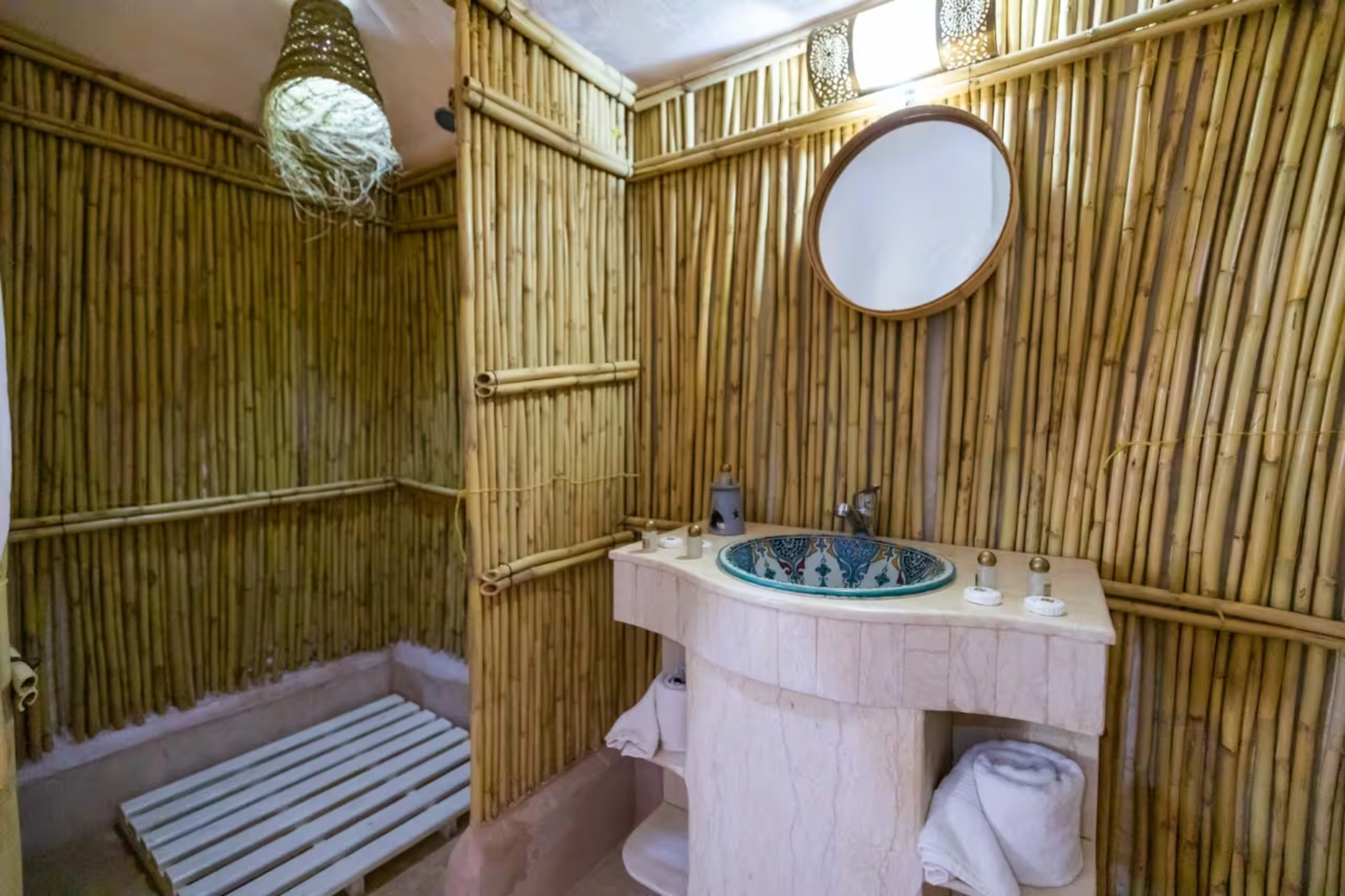
Arrival at Erg Chebbi is generally in the late afternoon.
The camels wait, saddled, ready for a ride of about an hour across the first sand ridges.
The pace is slow, almost hypnotic, and enough to wash away the fatigue of the road.
The camp then appears in a hollow between the dunes, Berber tents lined up around a communal space where dinner will be served.
The sunset, often admired from the top of a nearby dune, marks the transition between the road and the beginning of the night.
The evening at camp
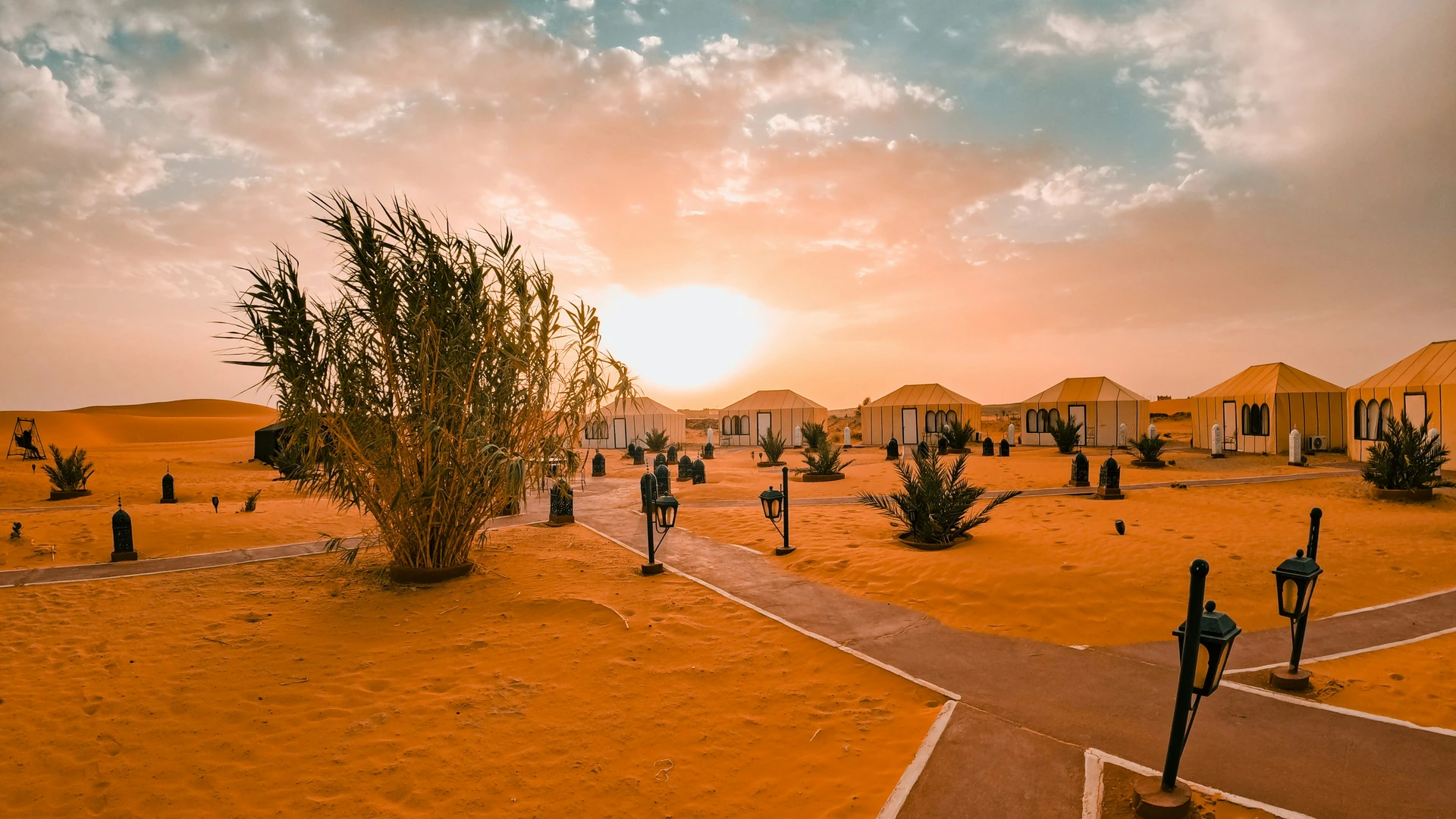
Dinner, often a tagine served under a communal tent, is followed by Berber musical entertainment to the sound of drums around the fire.
It is a convivial moment, but a modest one: no staged show, rather a few songs shared between guides and travellers.
Then the fire dies down.
Conversations thin out.
The camp falls asleep.
What remains once the noise is gone
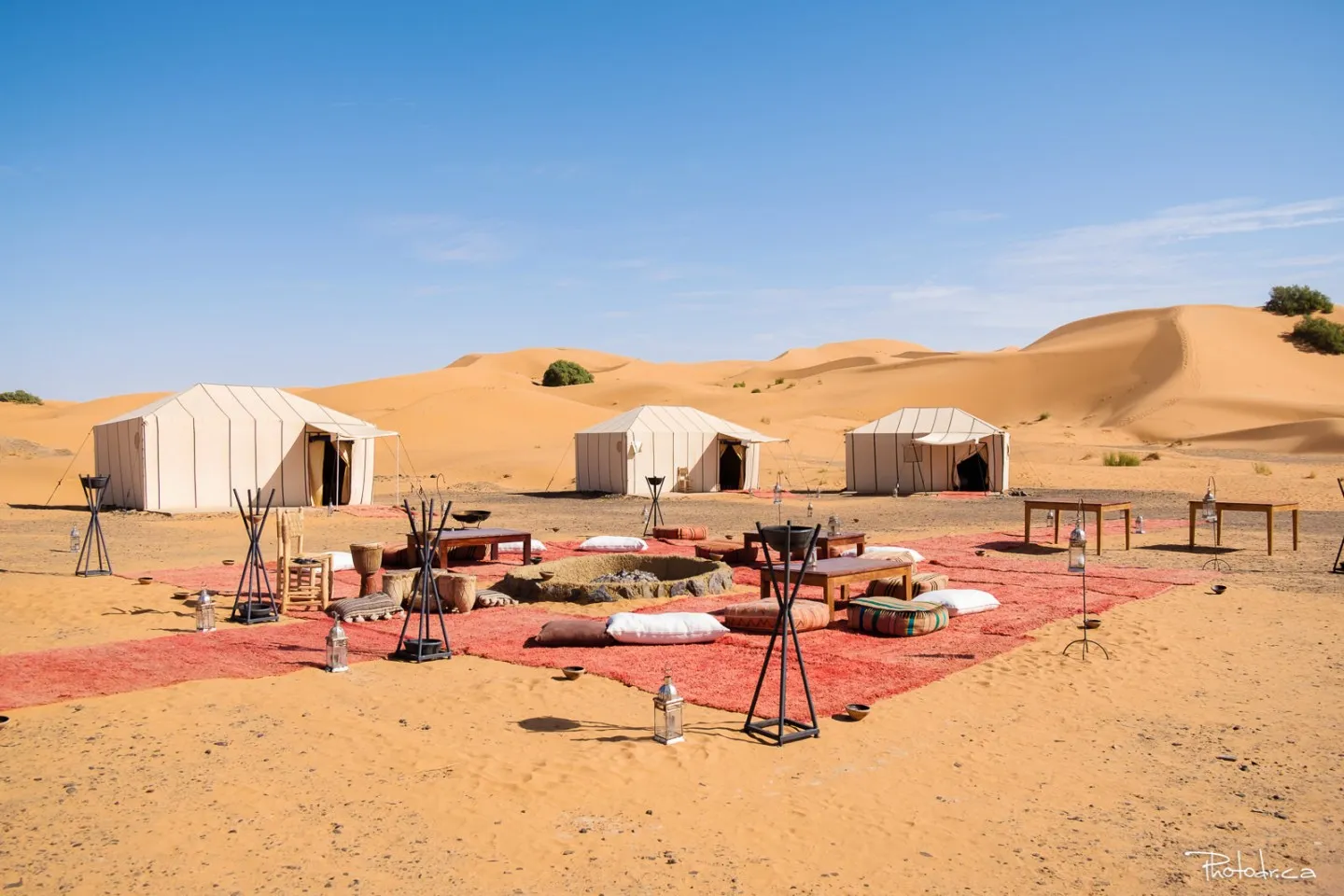
Then the drums stop.
No more music.
No more voices.
Only the wind on the sand and, without a moon, a sky saturated with stars.
It is often this moment, more than the sunset, that travellers remember when thinking back on their night in the desert.
For those who enjoy sky watching, our article on stargazing in Merzouga details the best conditions.
Comfort and gear to plan for
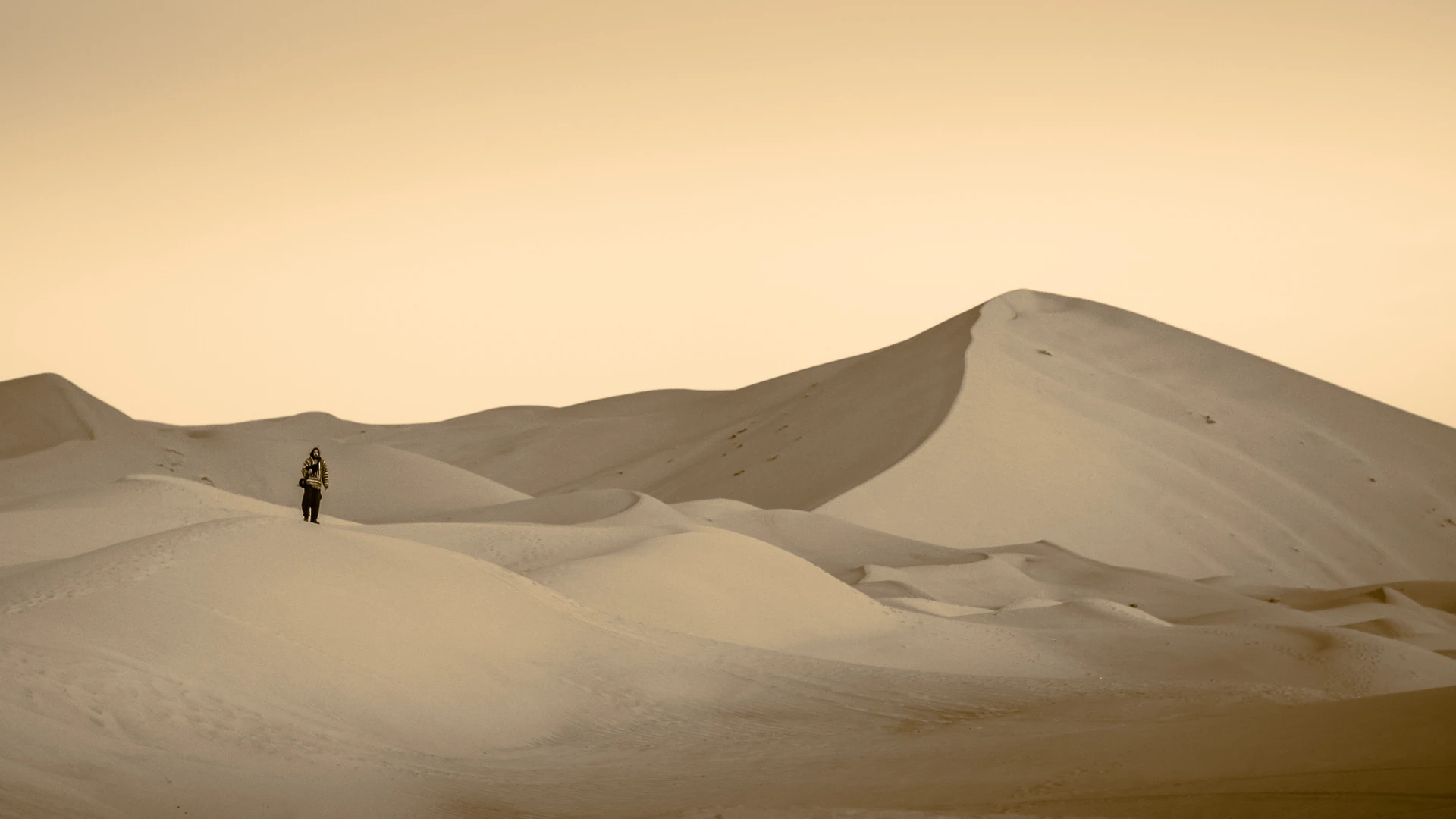
The comfort level varies greatly depending on the camp chosen: simple mattress and shared bathrooms on standard, comfortable bed and private bathroom on the luxury camp.
In all cases, a warm jacket, a beanie and a headtorch remain useful, as the temperature gap between day and night can exceed 20 degrees.
Fine sand gets everywhere: it is best to protect cameras in a sealed bag.
A power bank is also recommended, as electricity is limited or absent depending on the camp.
For more detail on climate conditions, the Moroccan National Tourist Office website gives a useful overview of the Saharan climate by season.
The wake-up and sunrise
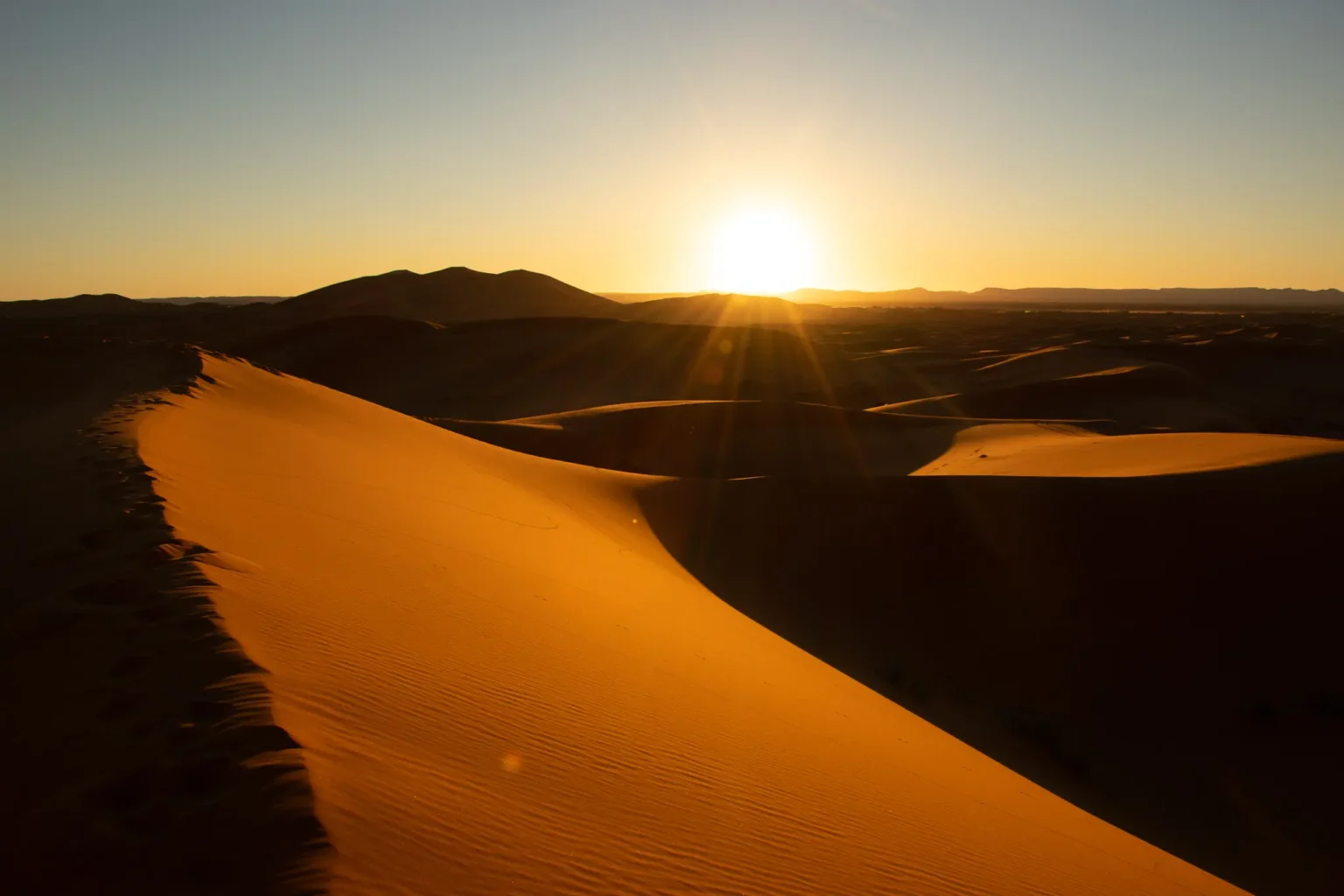
The morning starts early, before dawn, in the cold that precedes daylight.
Climbing the dune nearest the camp is generally enough to watch the sun appear behind the horizon, the colours shifting from grey to pink then orange in minutes.
It is a moment many travellers find more moving than the sunset the evening before: fewer people, more calm, and the feeling of having earned the scene after a night spent in the sand.
Breakfast is served shortly after, before the return to the hotel or the next stage of the tour.
How to avoid the option disappointing on arrival
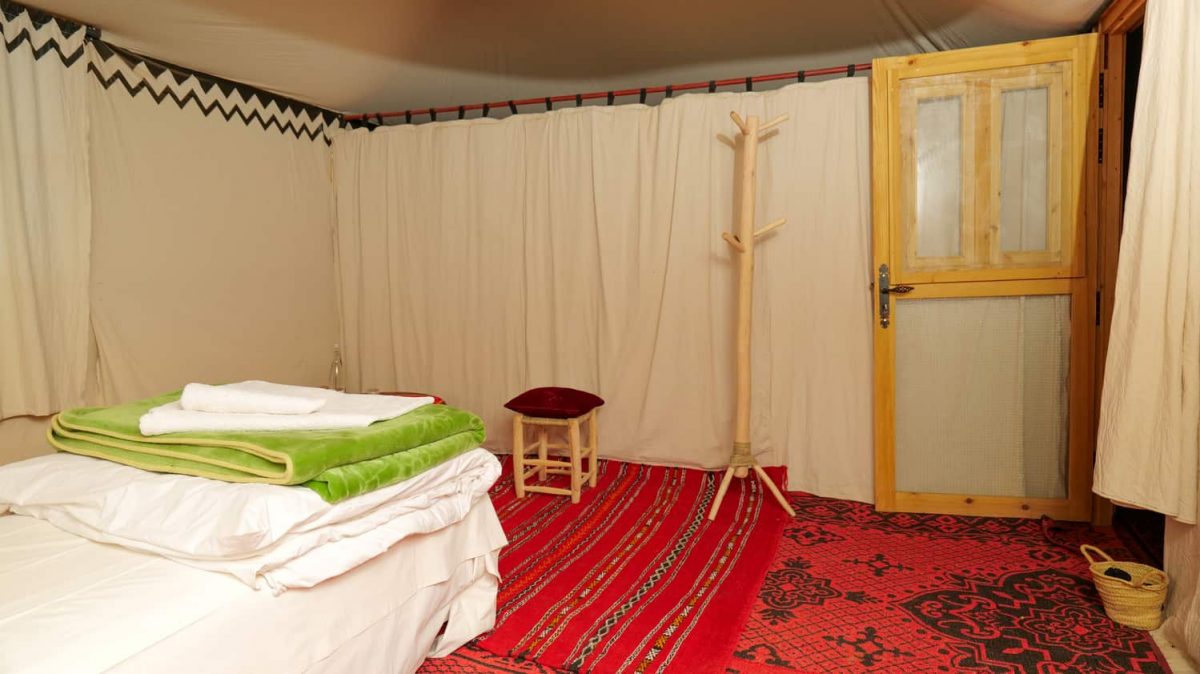
The main source of dissatisfaction reported about desert camp nights is not the desert itself, but the gap between the option paid for and what is actually delivered at camp.
Before departure, it is better to ask precisely what type of tent is planned, how many people will share it and whether the bathrooms are shared or private.
These are simple questions, but they avoid most of the unpleasant surprises experienced on arrival.
It is also worth confirming what is included in the dinner, especially if the group is large, to avoid arriving with different expectations from what the camp has planned.
To compare the three camp levels available on the same itinerary, our article on the desert camp excursion in Merzouga details what sets standard, comfort and luxury apart.
Is one night really enough
For most travellers, one night covers the essentials of what the desert can offer: sunset on arrival, dinner and entertainment, the silence of the night, then sunrise in the morning.
Adding a second night mainly changes the pace, not the content of the experience: less road to cover the next day, more time to walk in the dunes without time constraints.
This option suits a private format, where the programme can be freely adjusted, better than a shared group tour whose itinerary remains fixed.
For a first stay in the Sahara, one night remains a reasonable choice; travellers who come back a second time are often those who choose to add another.
Practical tip
Do not wait until you are cold to get your jacket out.
The temperature drop at sunset is fast, often more abrupt than expected, even for travellers used to contrasting climates.
Book Your Merzouga Tour on WhatsApp
Pick-up directly from your hotel in Marrakech.
No deposit required in advance.
Chat & Book Your Stay