
No reception desk, no key card, no all-you-can-eat buffet.
In Merzouga, some travellers deliberately choose to stay with a family rather than in a hotel — and that choice changes far more than the comfort of the room.
This guide explains what really sets a family inn apart, and who this format is for.
Nothing theoretical here — only what actually changes once you step through the door, from the first mint tea to the last goodbye on the doorstep.
What is a family inn in Merzouga?
The word "inn" here does not refer to a star rating.
It is a small establishment, often four to eight rooms, run directly by a local family — sometimes Berber, sometimes Arabic-speaking, depending on the area.
There is no hotel staff in the classic sense: the person serving tea on arrival is often the one who cooked dinner, and the one answering questions about tomorrow's route.
This format has existed in southern Morocco for a long time, well before desert tourism structured itself around large camps.
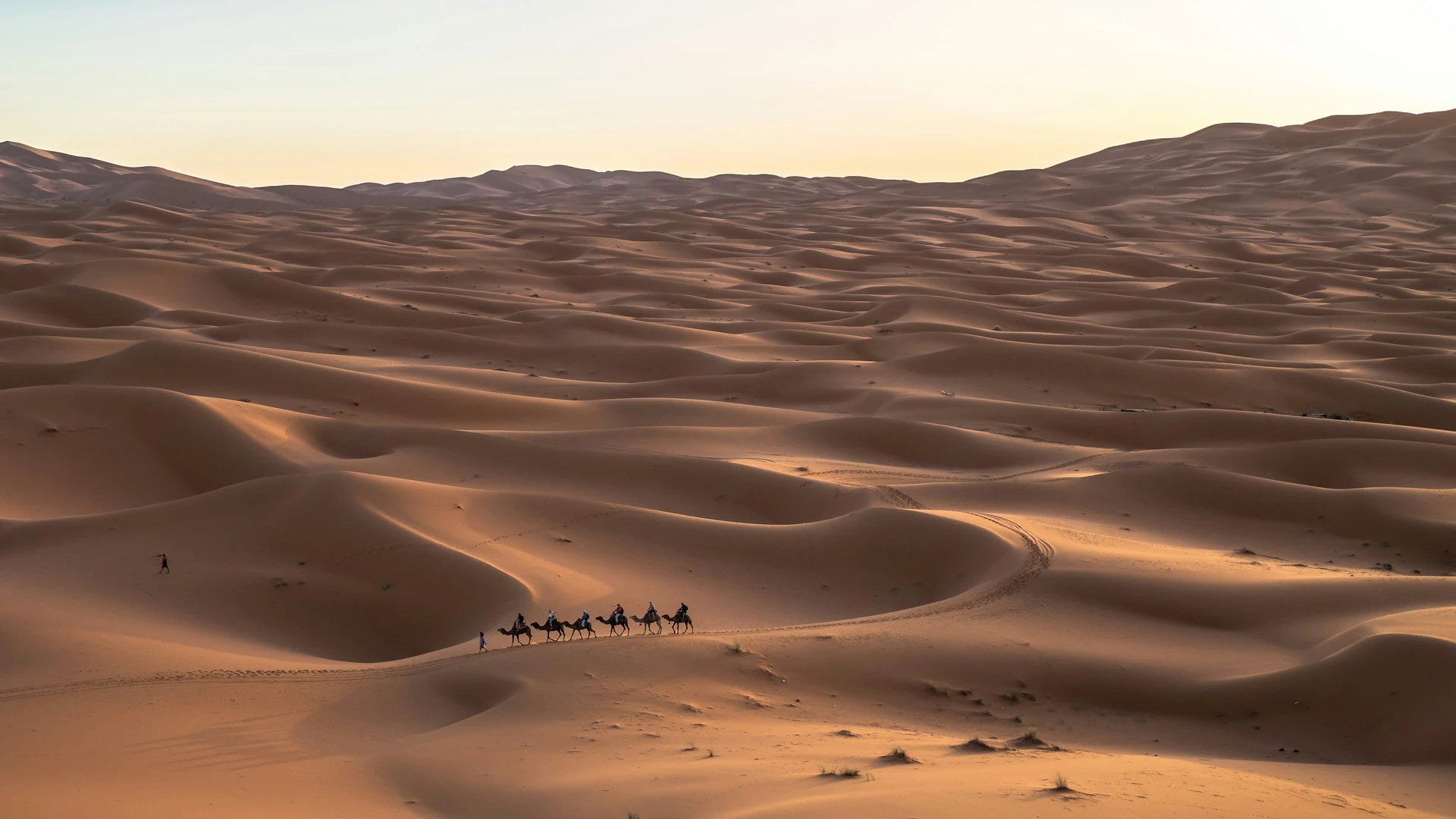
Most of these houses sit on the outskirts of the village, sometimes built in mud-brick, with a terrace opening straight onto the first dunes.
The limited number of rooms also changes the rhythm of meals: no fixed timetable imposed, but a dinner that starts when everyone is ready, often shared at the same table as the family.
How does it differ from a standard hotel?
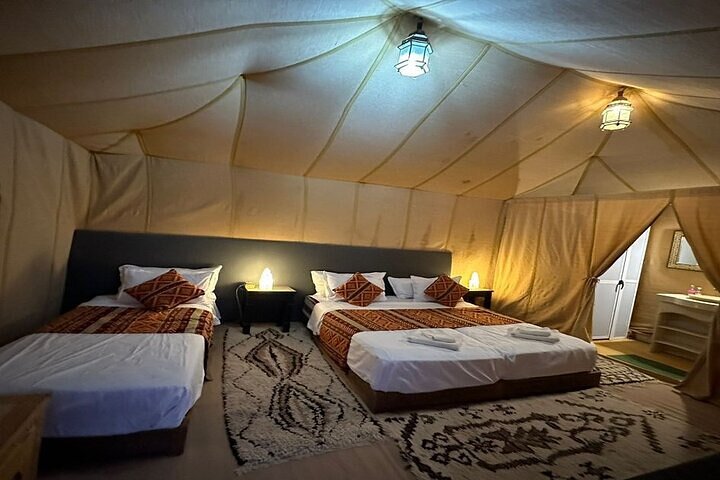
The size changes everything else.
In a hotel of twenty or thirty rooms, the kitchen follows a schedule and the guest is rarely more than a room number.
In a family inn, dinner depends on what was bought at the market that morning, and conversation with the hosts settles in effortlessly.
The flip side: fewer facilities, no pool in most cases, a menu limited to what the family cooks well — a compromise worth knowing, offset by a rate often more affordable than an equivalent-standard hotel.
Does this format suit every traveller?
No, and that is perfectly fine.
Travellers who come looking for a real encounter, curious to talk about local life and ready to accept more modest comfort, find something in this format that no hotel can reproduce.
Conversely, a traveller seeking anonymity, or who needs a pool, will be better served elsewhere.
Families with young children also often get on well with this format, provided they accept a more informal rhythm: milking the goats, making bread or visiting the family garden keep children busy far better than a standard pool.
How do you recognise an authentic family inn?
The number of rooms remains the most reliable indicator.
Below ten, direct family management is almost guaranteed; above that, the place looks more like a small hotel run by paid staff.
Recent reviews also give good clues: those mentioning the hosts' first names or a specific anecdote about a shared meal almost always reveal a genuine family establishment.
According to the intangible cultural heritage listed by UNESCO, traditional Berber hospitality rests precisely on this direct transmission, from family to traveller, with no intermediary — a principle these small inns perpetuate without even thinking about it.
One last detail often gives the difference away: the way mint tea is offered, poured from a height, with a gesture passed down from generation to generation, rather than on a tray brought by a rushed employee.
Can you combine an inn and a desert camp?
Most travellers do not stay exclusively in an inn for the whole trip.
A common formula is one night in a family inn on arrival or departure, then one night at a desert camp in the Erg Chebbi dunes.
Many inns keep direct links with nearby camps, which makes the next-day transfer simpler, with no detour through a third-party agency.
Practical tip
Book directly rather than through a large platform if you can: the price is often the same, but the family keeps a larger share of the booking, and the welcome is often all the warmer for it.
Book Your Merzouga Tour on WhatsApp
Immediate confirmation with no deposit required in advance.
Pick-up at your hotel.
Book Your Stay