
The sound arrives first from afar, a mechanical purr carried by the wind above the dunes.
Then the buggy appears, bumping along a ridge, two figures sitting side by side, each in their own seat.
It is the first visible difference from the quad: nobody is clinging to anybody.
The buggy has established itself in Merzouga as the most popular motorised vehicle among couples and families, precisely for that reason.
Here is what really sets it apart from the quad, what a session costs, and what you need to know before taking the wheel for the first time.
What sets a buggy apart from a quad
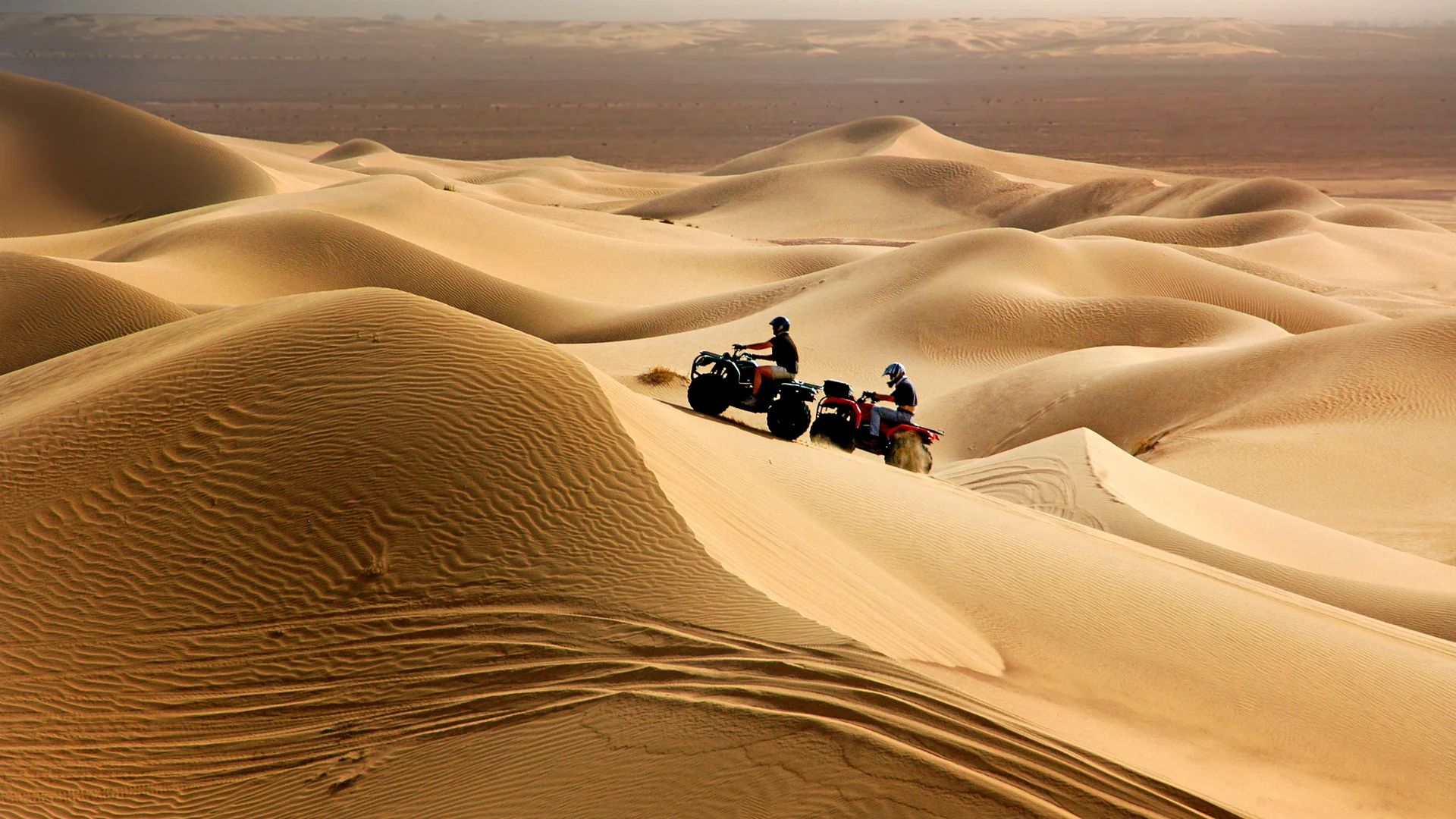
The buggy looks like a small off-road car: a tubular roll cage, bucket seats, a steering wheel, pedals.
The quad, on the other hand, is ridden standing or leaning forward, exposed to flying sand and direct sun.
On a buggy, two passengers climb on separately, each strapped into their own seatbelt, without having to hold on to the driver's waist to avoid tipping in tight corners.
There is a trade-off: wider than a quad, the buggy handles slightly less precisely on the narrowest dune ridges.
For sporty solo riding, the quad retains a real advantage.
For a shared moment without physical acrobatics between driver and passenger, the buggy wins almost every time.
How much does a buggy session cost
An hour of riding in the dunes, solo or two-up, is generally around 30 to 45 €.
Longer options, two hours or a sunset tour, are closer to 70 €.
This rate covers fuel, safety equipment and a guide who stays with the group from start to finish.
Some operators offer to follow a buggy session directly with a night in a desert camp, without returning to the village in between.
Accessible riding without experience
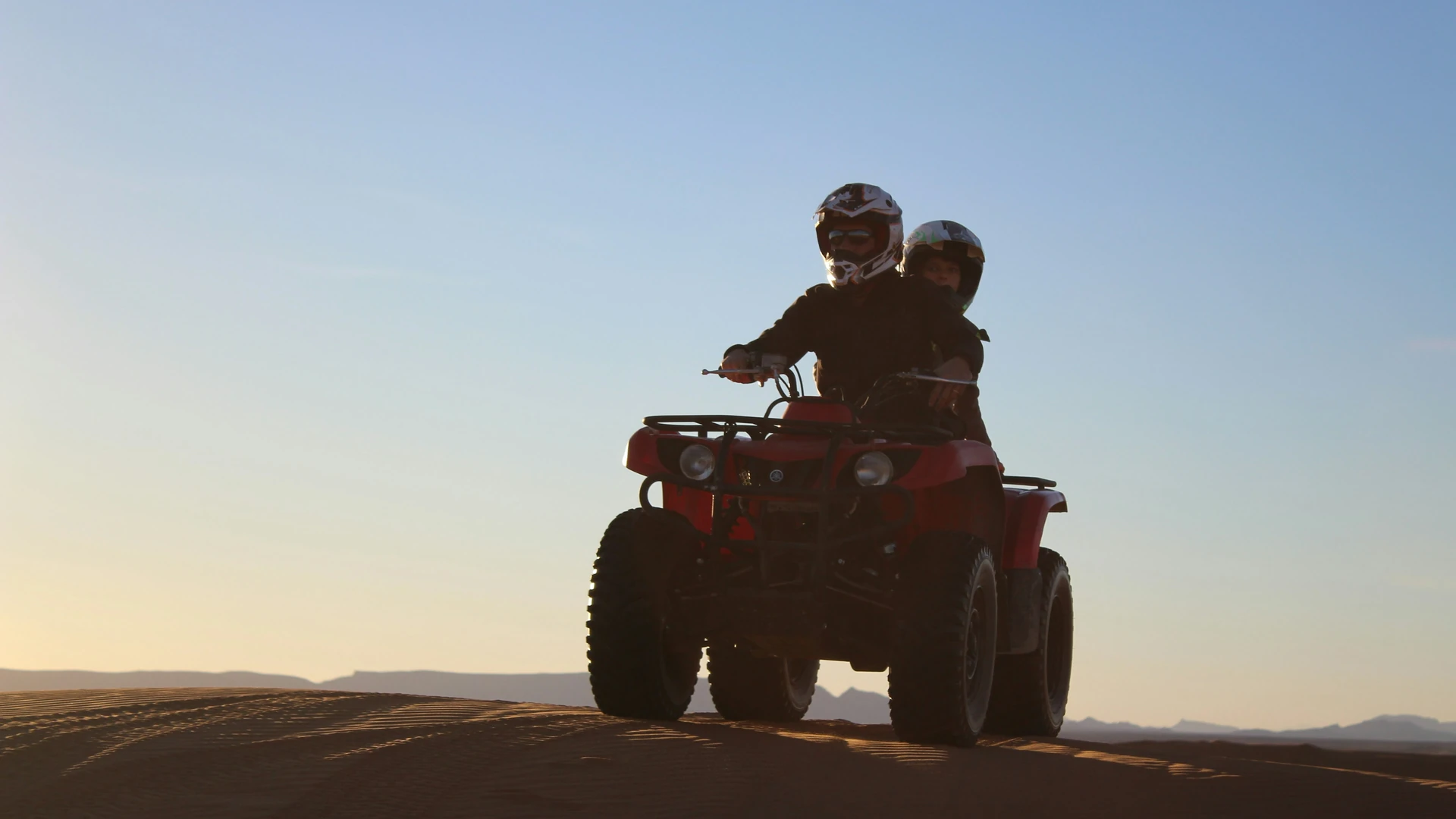
No prior off-road driving experience is necessary.
A safety briefing always precedes departure, followed by a familiarisation session on flat ground before entering the real dunes.
The first few minutes almost always come as a surprise: sand behaves differently from tarmac, less grip, more sliding in corners.
The guide naturally slows the convoy for those less comfortable.
After about ten minutes, most drivers find their feet and finally start looking at the landscape rather than their own hands on the wheel.
When to ride, and what to wear
The late afternoon remains the most popular slot, between 4pm and 6pm depending on the season: the heat subsides, the low-angle light sculpts the shape of the dunes, and the tour often ends with a stop as the sun touches the horizon.
In summer, a morning outing before 9am avoids the most extreme temperatures.
Even inside a buggy, sand always finds a way in: covering clothes, closed shoes and a light jacket for the end of the day remain useful.
The terrain is never the same from one ridge to the next
Some sections offer compact sand, almost like a marked track.
Other ridges require enough speed not to get stuck, a balance the guide knows by heart.
Many travellers follow a buggy session with a camel ride at sunset.
The contrast between the two rhythms, mechanical then animal, makes the end of the day particularly memorable.
Practical tip
Book the two-seater option if you are travelling as a pair: comfort and safety are clearly superior to sharing a quad, for a price difference that remains modest.
Also check that the operator provides a safety briefing before departure, as recommended by the Moroccan National Tourist Office.
Buggy rides can be booked as an add-on to our 3-day tour and our 4-day tour, alongside the night in a desert camp.
Book Your Merzouga Tour on WhatsApp
Instant confirmation with no deposit required in advance.
Pick-up from your hotel.
Book Your Stay